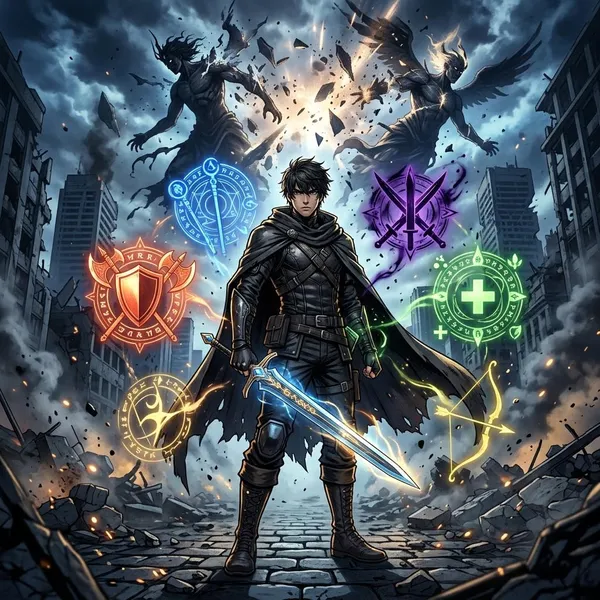
If you are looking up A Regressor's Tale of Cultivation manhwa, the short answer is that it is a darker cultivation regression story, not a simple "weak hero becomes overpowered" setup. Seo Eunhyeon is thrown into a brutal cultivation world, seems to have almost no useful talent, and only discovers his real ability after dying. The reason readers keep talking about it is the cost: every reset helps him learn, but it also leaves him carrying memories no one else has.

What Is A Regressor's Tale of Cultivation About?
The story follows Seo Eunhyeon after he and six others are transported into a cultivation world where strength, talent, sect backing, and luck decide who survives. The setup may sound familiar if you read isekai or murim-style fantasy, but the tone is harsher than a comfort-power story.
Seven people enter a cultivation world
The opening group matters because it gives readers an immediate comparison point. Seo Eunhyeon is not the only outsider, and several of the others seem to adapt better or possess clearer potential.
That makes the early chapters work better than a single-hero summon. If you are new to cultivation stories, this contrast quickly shows how unfair the world is. Talent is not just a bonus here; it can decide whether someone receives protection, training, resources, or a quick death.
Seo Eunhyeon appears to have no talent
Seo's weak starting point is one of the main reasons the series feels tense. He does not look like a hidden genius waiting for one dramatic awakening. He looks like someone who may genuinely be left behind.
For readers tired of protagonists who solve every fight with a secret cheat, this is the main appeal. Seo's progress feels closer to endurance than wish fulfillment.
Death reveals his infinite regression
Seo's real ability appears through death: when he dies, he returns to the beginning while keeping his memories. That sounds powerful, but the story treats it as a painful condition rather than a clean reward.
The useful part is information. He can remember dangers, people, choices, and mistakes from previous lives. The cruel part is that he also remembers fear, loss, and failed timelines that everyone else forgets. A reader who wants quick revenge fantasy may find the pacing heavier, while someone who enjoys psychological weight will probably see why the premise works.
Why Does the Manhwa Stand Out?
The manhwa stands out because it does not let regression remove danger from the story. Seo can learn from previous lives, but knowledge does not make him equal to stronger cultivators, powerful sects, or unpredictable enemies.
Regression works like a curse
Many regression stories make death feel like a shortcut. Here, it still feels like a loss. Seo gets another attempt, but the price is living through the end of a timeline and carrying that damage forward alone.
That detail keeps the loop from becoming too convenient. Even when readers know he can return, a death still matters because it changes how he thinks, trusts, prepares, and fears.
Progress feels earned
Seo improves because he collects hard lessons across lives, not because the plot suddenly removes his limits. A failed route may teach him what to avoid. A painful encounter may show him when to stay silent, when to run, or when to take a narrow chance.
This is where the series works best for progression-fantasy readers. The reward is not only a stronger technique or a higher realm; it is watching Seo become more capable through decisions that make sense.
Each life has consequences
A reset does not erase the story for Seo. It erases the timeline for everyone else, but he still carries what happened, and that gives each life emotional weight.
Cultivation stays dangerous
The cultivation world remains threatening because prior knowledge has limits. Seo may know one trap and still be helpless against a stronger opponent, a political shift, or a danger he never reached in an earlier life.
That makes the manhwa better suited to readers who like pressure in every arc. If you prefer a protagonist who becomes untouchable quickly, the story may feel slow. If you like a world where advancement never fully removes risk, the danger is part of the appeal.
A Regressor's Tale of Cultivation Manhwa vs Web Novel
The manhwa and web novel share the same core story, but they serve different reading habits. The manhwa is the easier entry point because the art gives the world and Seo's suffering immediate impact. The web novel is usually the better choice if you want more inner thought, cultivation detail, and long-form buildup.
| Best choice if you want... | Read this version |
|---|---|
| A quick visual start and easier first impression | Manhwa |
| More of Seo's thoughts and planning | Web novel |
| To catch up while the comic is between seasons | Web novel, after checking where the manhwa stops |
Level of detail
The web novel has more room for Seo's reasoning, emotional strain, and the smaller steps behind his cultivation progress. That extra detail matters because this story depends on accumulated experience rather than one-time power boosts.
The manhwa still carries the main plot clearly. It simply has to compress some internal texture so the comic can keep moving.
Pacing
The manhwa tends to feel faster, especially for readers who want the premise, danger, and character dynamics without long internal passages. It is a good first choice if you are only testing whether the story fits your taste.
The novel's slower pace is not automatically a weakness. For readers who enjoy methodical progression, that extra space can make each life and each adjustment feel more meaningful.
Presentation
Visual presentation gives the manhwa a strong advantage in expressions, atmosphere, and sudden danger. A painful moment can land in one panel without needing much explanation.
Prose has the opposite strength: it can stay inside Seo's head. If what hooks you is the psychological burden of remembering too many lives, the novel may eventually feel fuller than the adaptation.
Where to Read A Regressor's Tale of Cultivation Officially
For English readers, the safest starting point is the official WEBTOON release. Official pages matter for this title because season breaks, alternate titles, and reposted chapter labels can make the status look more confusing than it is.
English release on WEBTOON
The official English manhwa release is on WEBTOON. That is the best place to begin if you want legal access, clean episode organization, and the most reliable English status notices.
At the referenced Season 1 listing, the first season is shown as ending around Episode 25, with the series marked to return. Because platform schedules can change, check the series page itself before relying on dates shared elsewhere.
Korean release on Naver Series
The Korean release is tied to Naver's publishing ecosystem, including Naver Series-related pages. Most English readers will not need those pages for casual reading, but they can help if you want to verify the original Korean context.
This is especially useful for dedicated fans comparing the manhwa with the web novel. Just avoid treating unofficial repost sites as status sources; they often mix numbering, delay notices, and translation labels in ways that create unnecessary confusion.

Conclusion
A Regressor's Tale of Cultivation is worth starting if you want a regression manhwa where survival feels costly and progress has weight. The manhwa is the easiest entry point, especially through the official WEBTOON release, while the web novel is the stronger next step if you want more detail during season gaps. Go in expecting a harsh climb rather than a quick power trip, and the story's slower, heavier approach makes much more sense.