If you searched for a theme for every building manhwa, you are probably trying to confirm what the title actually is, what the "building theme" gimmick means, and whether it is worth starting. The short answer: it is a modern fantasy manhwa with harem, romance, and mature elements, built around buildings that seem to operate under different concepts or rules.
What Is A Theme for Every Building About?
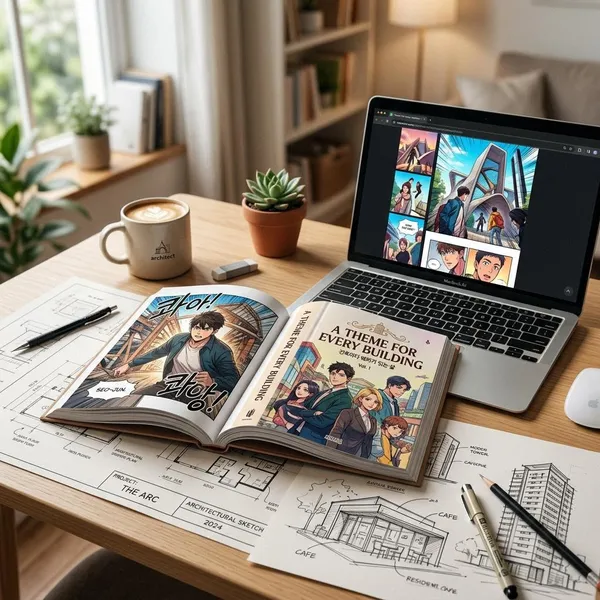
A Theme for Every Building follows an ordinary modern setting that turns strange once certain locations begin to affect what happens inside them. The Korean title is 건물마다 컨셉이 다름, which is often understood as "each building has a different concept," and readers may also see it referred to as Every Building Has a Gimmick.
An intern's strange first encounter
The story begins from a fairly grounded place: a young man dealing with work-life pressure and an encounter that feels too unusual to dismiss as normal. That early setup matters because it tells you the tone quickly. This is not a slow, innocent slice-of-life romance that only becomes strange much later.
Buildings with changing concepts
The main hook is that buildings are not passive locations. Each one can introduce a different concept, mood, or local logic, so moving to a new place can also mean moving into a new kind of scenario.
- For a casual reader, this makes the title easy to understand without heavy lore.
- For a regular manhwa reader, it gives the series a stronger identity than a generic adult romance.
- For someone comparing titles, the building gimmick is the detail that separates it from more standard harem setups.
New rules in each setting
The story works best when a location creates a rule the characters have to react to. Instead of relying only on misunderstandings or coincidence, the manhwa can use a new building to change the pressure, the tone, or the type of romantic tension in a chapter.
A useful way to judge the premise is simple: if you enjoy stories where one strange rule bends everyday life, the setup has enough room to stay interesting. If you need detailed worldbuilding, strict magic systems, or a serious mystery behind every event, the lighter scenario-based structure may feel too loose.
How Does the Building Concept Shape the Story?
The building concept is the engine of the manhwa. It changes what kind of scene can happen, gives the fantasy a clear reason to exist, and keeps the modern setting from feeling like a plain backdrop.
Changes the rules
When the protagonist enters a new building, the story can shift without needing a completely new cast or a complicated explanation. A familiar urban space suddenly has different expectations, which helps the fantasy feel close to everyday life rather than distant or abstract.
Creates new scenarios
The strongest practical benefit of the concept is variety. One location can lean awkward or comedic, another can lean more seductive or tense, and another can push confusion between characters. That gives the series an episodic rhythm while still keeping the same core identity.
For readers who follow harem manhwa regularly, this matters. A common weakness in the genre is repetition: the same type of encounter, the same reaction, the same payoff. Here, the building gimmick gives the story another tool for changing the situation before it becomes too predictable.
Drives the fantasy
The fantasy is not just decorative. Without the building mechanic, the series would be much closer to a standard mature romance. With it, the characters are constantly being pulled into situations shaped by the place they enter.
What Kind of Manhwa Is It?
This is best described as modern fantasy mixed with harem romance and mature content. That combination is important because readers can arrive with very different expectations: some are looking for the clever building premise, while others are mainly checking whether the romance and adult tone match their taste.
Modern fantasy
The modern fantasy label fits because the story starts in ordinary contemporary spaces rather than a separate fantasy world. Offices, shops, streets, and buildings remain recognizable, but the hidden concepts inside them bend normal behavior and expectations.
Harem
The harem element is not a minor side detail. The story revolves around a male lead and multiple women whose interactions become romantic, sexual, or emotionally charged depending on the situation.
This is where reader preference matters most. If harem setups usually annoy you, the building concept may not be enough to change that. If harem romance is already something you read, the changing-location premise can make the format feel less flat.
Romance
The romance is tied closely to attraction, awkwardness, and fantasy-driven pressure rather than a slow, realistic relationship arc. It is better to expect scenario-based chemistry than a carefully paced emotional drama.
Is A Theme for Every Building Worth Reading?
A Theme for Every Building is worth trying if the phrase "each building has its own concept" already makes you curious. The title's value is not that it reinvents manhwa storytelling completely, but that it gives a familiar mature romance format a clear fantasy mechanism.
The safest way to decide is to read a small number of official chapters and judge three things: whether the concept grabs you, whether the harem tone works for you, and whether the mature content is within your comfort zone.
For high-concept fantasy fans
It is a strong maybe. The premise is clean, memorable, and easy to explain, which is exactly what a high-concept fantasy hook needs. It is especially appealing if you like stories where one altered rule changes ordinary life.
The limit is that the fantasy seems more situational than lore-heavy. If your favorite part of fantasy is deep systems and long-term mythology, this may feel lighter than you want.
For harem romance fans
Harem romance fans are the most obvious audience. The series uses multiple character interactions, attraction, and mature tension, but the building concept gives those encounters a more specific structure than random coincidence.
- Try it if you want harem romance with a visible gimmick.
- Be cautious if you dislike repeated romantic pressure around one lead.
- Skip it if you only enjoy romance when it focuses on one stable couple.
For readers comfortable with mature themes
This title is better suited to readers who are already comfortable with adult-oriented manhwa. The mature tone is not something to treat as a tiny add-on; it is part of the way the scenarios are built.
If you are unsure, do not rely only on plot summaries. Check the official platform's rating, tags, preview pages, or age notice before reading. That is the quickest way to avoid starting a series that is outside your comfort range.
A Theme for Every Building Manhwa Status
Status information can be confusing because this title appears under more than one English wording, and unofficial sites may show outdated chapter counts or inconsistent names. The practical approach is to separate the Korean release from the English release and check each one on its official platform.

Korean release
The Korean release is the best place to verify the original title, latest available chapters, and current publication status. Search for 건물마다 컨셉이 다름 if the English wording does not lead you to the right listing.
Even if you do not read Korean comfortably, the official Korean page can still help confirm that you are looking at the correct series rather than a reposted or renamed entry.
English release
The English release may not match the Korean release chapter-for-chapter at every moment. That is normal for licensed digital manhwa, especially when the original version updates first and the English version follows later.
For English readers, the main check is not just "how many chapters does a random site show?" but whether the licensed page is active, organized, and using the correct title. That gives a much cleaner answer than relying on aggregator metadata.
Where to Read A Theme for Every Building Officially
The best place to read the series is through its official listings. This matters for any manhwa, but it matters even more here because the title can appear under different translated names, which makes unofficial search results messy.
Start with the platform that matches your language, then use the Korean title if you need to confirm you have found the same work. Avoid judging status from mirror sites alone; they often mix names, skip chapters, or lag behind official updates.
DAYCOMICS in English
DAYCOMICS is the official English platform to check for the licensed English version. It is the most practical starting point if you want readable chapter order, consistent naming, and a clearer sense of whether the English release is still updating.
If you are deciding whether to buy or continue, use the official preview, tags, and rating information first. Those details are more useful than a vague recommendation because they show whether the tone fits your own reading limits.
Toptoon in Korean
Toptoon is the Korean source to check for the original release. It is useful for confirming the Korean title, comparing release progress, and avoiding confusion caused by alternate English translations.
For readers who only read in English, Toptoon still has value as a reference point. If two sites use different names, matching the Korean title is often the simplest way to confirm they are talking about the same manhwa.
Conclusion
A Theme for Every Building is easiest to recommend to readers who enjoy modern fantasy hooks, harem romance, and mature scenario-driven storytelling. Check the official English or Korean listing first, sample the opening, and decide based on the building concept and tone rather than the title alone; if those two pieces work for you, the manhwa has a clear reason to keep reading.