If you are trying to keep the akira anime characters straight, start with five names: Kaneda, Tetsuo, Kei, Colonel Shikishima, and Akira. Kaneda and Tetsuo carry the emotional story, while Kei, the Colonel, the Espers, and Akira reveal why Neo Tokyo is already close to collapse.
Who Are the Main Akira Anime Characters?
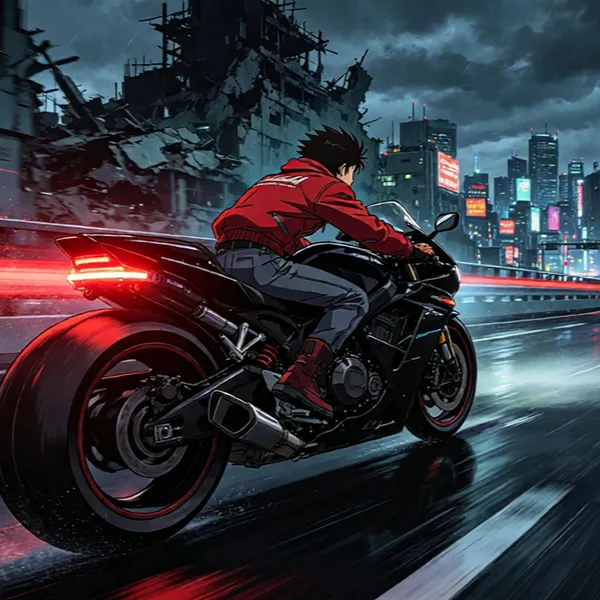
The main cast of Akira works best if you separate the characters by what they do in the story, not just by how much screen time they get. Kaneda is the street-level viewpoint, Tetsuo is the personal tragedy, Kei brings in the resistance, Colonel Shikishima represents military control, and Akira is the hidden force behind Neo Tokyo's fear.
Shotaro Kaneda the leader of the Capsules
Shotaro Kaneda is the character most viewers follow through the chaos of Neo Tokyo. He leads the Capsules with swagger, impatience, and a need to act before he fully understands what is happening.
- He grounds the story: Kaneda has no psychic powers, so the supernatural threat feels bigger beside him.
- He gives the film momentum: his bike, jacket, and attitude make him instantly recognizable.
- He adds emotional weight: his fight with Tetsuo is not against a stranger, but against a friend he once tried to protect.
Tetsuo Shima the friend who gains psychic powers
Tetsuo Shima is the cast's most tragic figure. He starts as Kaneda's weaker, more insecure friend, and that old imbalance becomes dangerous once psychic power gives him a way to push back.
He is not frightening only because he becomes powerful. He is frightening because the power lands inside someone already full of humiliation, anger, fear, and a desperate need to be seen as strong. If you are deciding whether to read him as a villain or a victim, the better answer is both: his actions become monstrous, but the movie keeps showing the wounded person underneath.
Kei the resistance member connected to Kaneda
Kei connects Kaneda's biker-gang world to the political side of Neo Tokyo. She is involved with the anti-government resistance, so her scenes pull the story away from street fights and toward military secrecy, psychic experiments, and public unrest.
Her role is easy to underestimate because she is less visually loud than Kaneda or Tetsuo. Still, she gives Kaneda direction when he would otherwise be reacting blindly. For viewers who feel the plot suddenly expands, Kei is the character to track: she shows that Tetsuo's crisis is part of a much larger failure.
Colonel Shikishima the military commander
Colonel Shikishima is the stern military commander trying to prevent another catastrophe. He is harsh and authoritarian, but he is not written as a simple power-hungry villain.
His importance comes from the uncomfortable position he occupies. He understands the danger better than the politicians around him, yet his tools are still military tools: secrecy, force, containment, and command. The movie makes that feel inadequate on purpose. Shikishima can recognize the threat and still fail to control it.
Akira the center of Neo Tokyo's disaster
Akira is the title character, but not the everyday protagonist. He is the hidden center of the disaster that reshaped Tokyo and the reason so many people in power are terrified of psychic ability.
His role is different. He is a person, a secret, and a warning all at once: proof that the experiments went further than anyone could safely manage.
Who Is Akira in the Anime?
Akira is a psychic child whose power is tied to the destruction of Tokyo and the creation of Neo Tokyo. The film keeps him mysterious for much of its runtime because his name is less like a normal character introduction and more like a buried trauma the whole city is trying not to face.
If you are watching the movie for plot clarity, treat Akira as the answer to three questions: what happened before Neo Tokyo, why the military is so afraid of Tetsuo, and what kind of power the experiments were trying to control.
Akira as a powerful psychic child
Akira's psychic power is extreme enough to move the story beyond normal science fiction action. He is not just another talented Esper; he represents a level of force that adults tried to study, contain, and possibly use without truly understanding it.
The fact that he is a child makes that power more disturbing. Akira is not only warning about dangerous ability. It is also showing the moral failure of turning children into experimental subjects and then acting surprised when the result becomes uncontrollable.
Akira's connection to Neo Tokyo
Neo Tokyo exists in Akira's shadow. The city is rebuilt, crowded, violent, and politically unstable, but it never feels healed. Akira is part of the reason: the official world has buried the truth instead of dealing with what happened.
That connection helps explain the mood of the film. The protests, military presence, youth violence, and distrust do not feel random. They feel like symptoms of a society built on an unresolved disaster.
Akira's role in the main conflict
Akira is both the origin point and the endpoint of the central conflict. The old experiments explain why the military recognizes Tetsuo as a serious threat, and Tetsuo's search for Akira pushes the story toward another collapse.
- For Tetsuo: Akira represents ultimate power and proof that he is no longer weak.
- For the military: Akira represents a disaster that must not happen again.
For the audience: Akira explains why the personal, political, and supernatural parts of the movie are connected.
How Are the Akira Characters Connected?
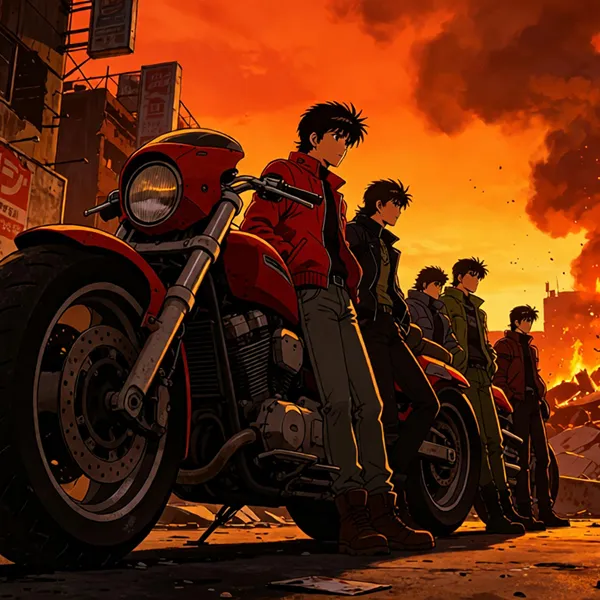
The character relationships in Akira are easier to follow if you see them as a chain reaction. A biker-gang incident pulls Tetsuo into the military's world, which exposes the Esper project, which leads back to Akira and the disaster Neo Tokyo was built around.
Two viewing situations change what you may notice. On a casual first watch, Kaneda and Tetsuo's friendship is the clearest thread. If you are watching more carefully, the resistance, Espers, and military explain why that friendship breaks inside a city already full of pressure.
Kaneda and Tetsuo's friendship and rivalry
Kaneda and Tetsuo are friends, but not equals in Tetsuo's mind. Kaneda is louder, more confident, and used to taking charge, while Tetsuo has spent years feeling protected in a way that also feels humiliating.
That is why Tetsuo's powers do not create the rivalry from nothing. They reveal what was already there. Kaneda still reacts like the friend who wants to pull him back; Tetsuo hears that as another attempt to keep him small. The tragedy is that both readings make emotional sense.
Kei and Kaneda's connection through the resistance
Kei and Kaneda are first connected by circumstance, but she quickly becomes his route into the resistance plot. She knows there is more happening in Neo Tokyo than gang violence, and Kaneda follows partly because he is drawn to her and partly because Tetsuo's disappearance gives him a reason to keep pushing.
Their dynamic works because they are not the same type of character. Kaneda moves by instinct; Kei moves with purpose. Together, they keep the story from staying trapped in either teenage rebellion or political exposition.
The military and Espers behind the Akira project
The military, the Espers, and the Akira project form the hidden structure behind the movie. Takashi, Masaru, and Kiyoko are living evidence that the experiments damaged children long before Tetsuo appeared.
This is the key connection many viewers miss on a first watch: Tetsuo is not an isolated accident. He becomes terrifying because he enters a system that has already produced Akira and already knows what psychic power can do. The military's panic is not random; it comes from experience, guilt, and fear of repetition.
Who Are the Espers and Supporting Characters?
The Espers and supporting characters make Akira feel larger than Kaneda and Tetsuo's conflict. They show the cost of the experiments, the everyday bonds inside the Capsules, and the people hurt when Tetsuo's power spreads beyond anyone's control.
Takashi Masaru and Kiyoko as the Espers
Takashi, Masaru, and Kiyoko are the psychic children connected to the same experimental world as Akira. Their aged faces and calm, strange behavior immediately suggest that power came with a lasting cost.
They are not just background lore. They warn, intervene, and help the audience understand why Tetsuo's awakening is so dangerous. If Akira is the buried catastrophe, the Espers are the survivors who show what the project did to actual children.
Kaori and her connection to Tetsuo
Kaori matters because she shows the softer and more painful side of Tetsuo. Around her, his need for attachment is clearer, which makes his collapse harder to dismiss as simple villainy.
Her scenes also make the danger more intimate. Tetsuo's powers do not only threaten buildings, soldiers, or the city as an abstract place. They endanger the person closest to him, which makes his loss of control feel crueler and more human.
Yamagata and the Capsules gang
Yamagata and the Capsules give Kaneda's world texture before the psychic plot takes over. They show the rough loyalty, rivalry, humor, and violence of teenage life in Neo Tokyo.
Yamagata's role is not large, but it is useful. He helps establish that Kaneda is part of a real group, not just a stylish loner on a red bike. When the story later turns catastrophic, that early gang context makes the losses feel less abstract.
Conclusion
The quickest way to understand Akira is to treat its cast as a set of pressures colliding: Kaneda's loyalty, Tetsuo's insecurity, Kei's resistance work, Shikishima's fear of another disaster, and Akira's impossible power. Once those roles are clear, the movie becomes less confusing and more tragic, because nearly every major character is either trying to control the damage, survive it, or prove they are not powerless inside it.