The easiest way to understand the aladdin animated characters is to sort them by what they do in the story: Aladdin is the underdog hero, Jasmine is the princess pushing back against palace rules, Genie is the magical friend, and Jafar is the threat trying to control Agrabah. If you are helping a child remember the cast, planning a costume, or comparing the animated film with the live-action version, start with those four and then add the side characters around them.
Who Are the Main Aladdin Animated Characters?
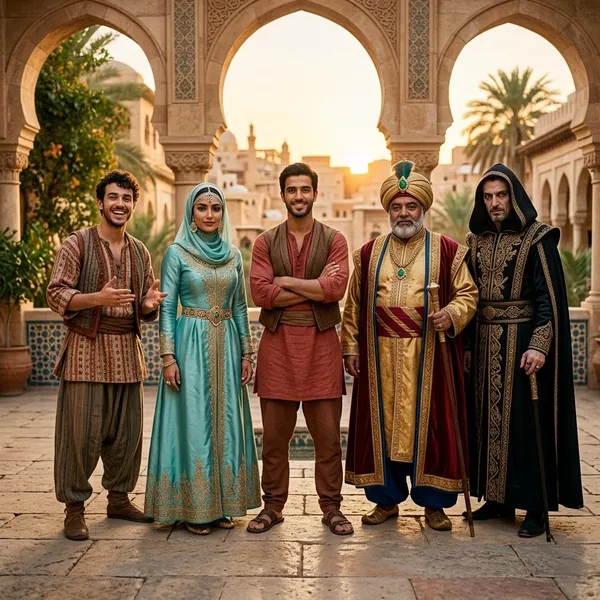
The main animated cast is built around four clear roles: hero, princess, magical companion, and villain. That simple setup is why the movie is easy to follow even for younger viewers, while still giving older fans enough character conflict to enjoy.
Aladdin as the street-smart hero
Aladdin begins as a poor young man surviving in Agrabah with quick thinking, charm, and a lot of nerve. He is easy to root for because he is generous even when he has very little, but he is not perfect: his biggest mistake is believing he needs a false royal identity to be worthy of Jasmine.
That flaw is what makes him more useful than a simple "good guy." For a child watching the film, Aladdin is the brave hero. For an older viewer, he is also a reminder that pretending to be more impressive can damage the trust you are trying to earn.
Jasmine as the independent princess
Jasmine's role is not just to be Aladdin's love interest. She is the character who makes the palace conflict personal, because she has comfort and status but very little real choice.
Her strongest scenes work because she recognizes sincerity. She is not impressed by wealth alone, which is why Aladdin's disguise as Prince Ali creates a real problem rather than just a funny misunderstanding.
Genie as the magical companion
Genie brings the movie its biggest comedy, fastest visual jokes, and most magical moments, but his role is more emotional than it first looks. He grants wishes because he must, yet what he really wants is freedom.
- For the plot: he gives Aladdin access to magic and transformation.
- For the tone: he keeps the film playful when the story gets tense.
- For the ending: his friendship turns Aladdin's final choice into a character test.
Jafar as the main villain
Jafar is dangerous because he already has influence before he gets stronger. As royal vizier, he stands close to power, studies people's weaknesses, and uses patience instead of random chaos.
His goal is also very clear: he wants control of Agrabah. That makes him a strong villain for younger viewers to understand and a sharper one for adults to notice, because his threat comes from manipulation as much as magic.
Who Are the Supporting Characters in Aladdin?
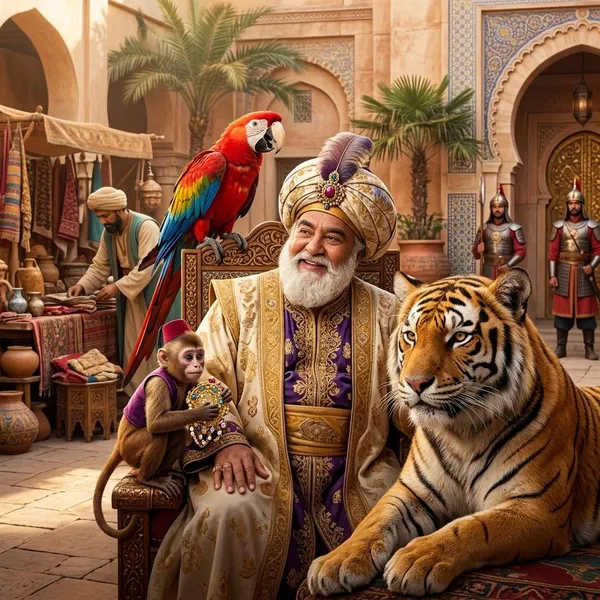
The supporting characters make Agrabah feel busy, funny, and lived-in. They also help viewers read the main characters faster: Abu shows Aladdin's softer side, Iago exposes Jafar's scheming, the Sultan adds family pressure, and Razoul represents palace authority.
Abu as Aladdin's loyal monkey companion
Abu is small, expressive, and mischievous, but he does more than fill space beside Aladdin. Because he reacts so clearly to danger, food, treasure, and jealousy, he often says what the scene is feeling without using full dialogue.
He also helps establish Aladdin's kindness early. A simple moment like sharing food matters because it shows the hero's character before any wishes, palaces, or magical disguises enter the story.
Iago as Jafar's clever sidekick
Iago gives Jafar's scenes a sharper rhythm. Jafar is controlled and calculating, while Iago is loud, impatient, and sarcastic, so the villain side never becomes too stiff.
His practical job is easy to miss: he makes plans easier to follow. When Jafar is plotting quietly, Iago's reactions help the audience understand the scheme, the frustration, or the next move.
The Sultan as Jasmine's caring father
The Sultan is warm and affectionate, but his kindness does not mean he always understands Jasmine. He wants safety and order, while she wants choice and respect.
That difference is useful if you are watching the film with kids. The Sultan is not the villain, but his decisions still create pressure. It is a good example of how a well-meaning character can be part of the problem when they do not listen closely enough.
Razoul as the palace guard captain
Razoul represents the rules of Agrabah in a very direct way. He is not the main villain, but he is often the face of the system Aladdin is trying to survive.
His scenes keep the story grounded. Before the magic lamp becomes central, Razoul reminds viewers that Aladdin's problem is not only poverty; it is also how quickly people in power judge him.
How Are the Aladdin Characters Connected?
The relationships are what make the cast feel memorable rather than just colorful. Aladdin and Jasmine connect through feeling trapped, Aladdin and Genie build a friendship around trust, and Jafar and Iago show the opposite kind of partnership: useful, selfish, and fragile.
Aladdin and Jasmine's relationship
Aladdin and Jasmine come from opposite sides of Agrabah, but both feel boxed in by status. He is dismissed because he has none; she is controlled because she has too much of it.
That shared feeling gives their romance more weight than instant attraction. The common mistake is to describe their relationship only as "street boy meets princess," when the stronger point is that both want to be seen as real people rather than labels.
Aladdin and Genie's friendship
Aladdin and Genie start with a practical arrangement: Aladdin has wishes, and Genie has to grant them. The relationship becomes meaningful when Aladdin begins treating Genie as a friend instead of just a source of magic.
This is one of the clearest places where the movie tells the viewer what matters most. Aladdin can gain status through a wish, but he only proves growth when he keeps his promise and values Genie's freedom.
Jafar and Iago's villain partnership
Jafar and Iago work together, but they are not loyal in the warm sense. Their partnership is based on advantage: Jafar uses Iago's help, and Iago stays close because he expects to benefit.
- Jafar supplies the plan: power, patience, and manipulation.
- Iago supplies the reaction: commentary, impatience, and comic bite.
- The weakness: neither one has the trust that holds the hero side together.
The palace characters and Agrabah's conflict
The palace characters turn personal choices into public conflict. Jasmine's future affects the kingdom, the Sultan's trust can be exploited, Razoul enforces the city's rules, and Jafar uses the palace structure to reach for power.
That is why Agrabah feels more important than a pretty backdrop. If you are comparing characters for a class discussion or review, this is the section to focus on: the palace is where family, law, class, and ambition all collide.
Aladdin Characters by Role
Grouping the cast by role is the fastest way to avoid mixing up names, especially if you are making a simple character list. The main thing to check first is whether the character helps Aladdin and Jasmine move toward freedom, helps Jafar move toward control, or belongs to the palace world that creates the conflict.
| Role group | Characters | What to remember |
|---|---|---|
| Heroes and allies | Aladdin, Jasmine, Genie, Abu | They push the story toward honesty, freedom, and loyalty. |
| Villains and helpers | Jafar, Iago | They use power, lies, and opportunity for personal gain. |
| Royal palace figures | Jasmine, the Sultan, Jafar, Razoul | They show how rules and authority shape life in Agrabah. |
Heroes and their allies
The hero side includes Aladdin, Jasmine, Genie, and Abu, but they are not all heroic in the same way. Aladdin brings courage and quick thinking, Jasmine brings moral clarity, Genie brings power and heart, and Abu brings loyalty with a little chaos.
For a simple viewing activity with kids, ask what each ally gives Aladdin that he does not have alone. That works better than asking who is "good," because it shows why the group matters.
Villains and their helpers
Jafar and Iago form the villain side, with Jafar as the real threat and Iago as the sharp-tongued helper. Their scenes are built around control, not care.
The cleanest way to spot the difference between them and the heroes is motive. The heroes make mistakes but still care about someone beyond themselves; Jafar and Iago mainly look for advantage.
Royal characters in Agrabah
The royal characters include Jasmine and the Sultan, with Jafar and Razoul also tied strongly to palace power. This group is where the movie's rules become visible: marriage expectations, law enforcement, political influence, and public duty.
Jasmine stands out because she is both royal and rebellious. She belongs to the palace, but she also challenges the parts of palace life that treat her future as something others can arrange.
Animated and Live Action Aladdin Characters
The animated and live-action versions use many of the same character names, but they do not always use them in the same way. The animated film leans into speed, exaggeration, and voice performance; the live-action version gives more space to grounded motivation and expanded roles.
Characters that stayed similar
Aladdin, Jasmine, Genie, and Jafar keep their core identities across both versions. Aladdin is still the clever underdog, Jasmine still wants more control over her life, Genie is still the magical companion, and Jafar remains the central villain.
Those similarities matter because they keep the story recognizable. Even when scenes or performances change, the basic character map stays easy to follow.
Characters with expanded roles
Jasmine receives one of the clearest expansions in the live-action version, especially around leadership and the future of Agrabah. That change makes her goals feel less limited to romance and more connected to the kingdom itself.
Dalia is also important in the live-action film because she gives Jasmine a closer personal companion inside palace life. For viewers who like side relationships and added context, that is one of the more noticeable changes from the animated movie.
Main differences between both versions
The biggest difference is delivery. Animated Genie can change shape, style, and pace almost instantly, while live-action Genie depends more on screen presence, dialogue, and performance style.
- Animation feels bigger: faster comedy, stronger visual exaggeration, more theatrical villain energy.
- Live action feels broader: more social context, added character details, and a more grounded palace setting.
- Best comparison point: watch Jasmine, Genie, and Jafar; their changes show the adaptation style most clearly.
Conclusion
The Aladdin cast works because each character has a clear job in the story: Aladdin tests honesty, Jasmine tests independence, Genie tests loyalty, and Jafar tests the danger of unchecked ambition. For quick recognition, remember the four main roles first, then add Abu, Iago, the Sultan, and Razoul to understand how Agrabah's humor, rules, and conflict fit around them.