All-Class Awakening: God Slayer is best approached as a fast revenge-regression manhwa: Elias Bai loses everything, wakes up twenty years earlier, and uses a rare awakening system to stop the same tragedy from happening again. If you like overpowered leads, second chances, class-based powers, and enemies who sit far above normal society, the setup fits that taste quickly.
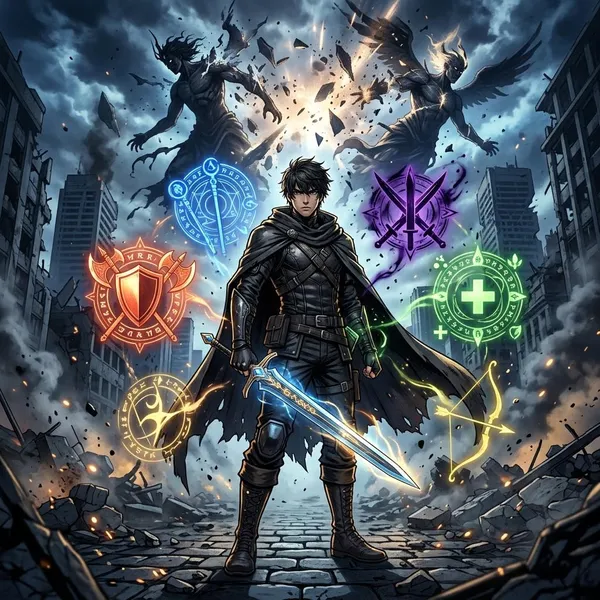
What is All-Class Awakening God Slayer about?
The story follows Elias Bai after a devastating betrayal in his first life. He was already a powerful Awakener, but strength alone did not save his squad, his loved ones, or his future. His return to the past gives the series its main drive: he knows what went wrong, and he is no longer willing to let powerful people decide who gets sacrificed.
Elias Bai loses his squad to betrayal
The betrayal is the wound that powers the whole plot. Elias was the captain of God's Legion, yet he and his squad were still treated as disposable by the people above them. That makes the opening tragedy feel bigger than a failed mission: it exposes a world where loyalty and strength can both be exploited.
That point matters if you are deciding whether the revenge angle has weight. Elias is not angry because he lost a fair fight. He is furious because the system he served decided his people were useful until they were not.
He returns 20 years into the past
Elias wakes up twenty years earlier, back before the losses that defined his first life. The reset gives him more than youth; it gives him timing. He can train earlier, avoid old traps, and move toward threats before they become impossible to stop.
The second chance also keeps the plot from feeling random. When Elias acts quickly, it is usually because he already knows which people, events, or power structures will matter later.
His family and teammates are alive again
Seeing his family and future allies alive again gives the revenge plot an emotional center. The story is not only about punishing enemies; it is also about protecting ordinary moments that were taken from him once before.
He sets out to rewrite their fate
Elias does not treat the new timeline as a chance to live comfortably. He uses it like a battlefield map. His priorities are clear:
- Find the people tied to the future betrayal.
- Build strength before the old timeline catches up.
- Protect allies before they become casualties.
- Prepare for enemies beyond normal Awakeners.
This is where the series works best for readers who enjoy proactive regressors. Elias is not waiting for fate to repeat itself so he can react dramatically; he is trying to break the chain early.

Who is Elias Bai?
Elias Bai is a veteran fighter forced back into a younger life with all the memory, guilt, and tactical awareness of his previous one. That contrast is central to his appeal: people around him may see someone young, but his decisions come from a man who has already watched the world betray him.
The former captain of God's Legion
As the former captain of God's Legion, Elias is not just another talented fighter. He carried responsibility for elite allies, and their deaths become part of his personal failure in his own mind. That background explains why he is so focused after regression: he is not trying to impress anyone, he is trying to prevent another massacre.
The strongest Awakener of his previous life
Being the strongest Awakener in his previous life adds an important twist. The story is not saying Elias lost because he was weak. It is saying even overwhelming strength can fail when the enemy controls information, politics, and the rules of the world.
That makes his second life more interesting than a simple climb back to the top. He needs better timing, better allies, and broader power, not just a higher damage ceiling.
A regressor determined to save his allies
Elias's most readable motivation is protection. He remembers who died, how it happened, and what he failed to stop. Because of that, even his ruthless choices usually have a practical aim: remove the threat before it reaches the people he wants alive.
A revenge-driven fighter against the ruling powers
His revenge points upward. Elias is not only chasing one rival or one traitor; he is moving against the elites and divine forces that made the betrayal possible. That wider target gives the manhwa room to grow beyond early personal payback.
- As a fighter, he is experienced rather than naive.
- As a leader, he carries guilt for those he lost.
- As a regressor, he values timing more than luck.
- As a challenger, he aims beyond ordinary human enemies.
How the awakening system works
The power system is built around awakening, classes, and Elias's unusual ability to go beyond the normal limits of one role. The important thing to understand first is that the system is not just a decoration for fights. It explains why Elias can rebuild so quickly and why his second life can go further than his first.
Elias gains the Infinite Awakening System
The Infinite Awakening System becomes Elias's main advantage after his return. Instead of being trapped on one fixed path, he gains a framework that can keep expanding as the stakes rise.
That matters because his enemies are not limited to early-level opponents. A narrow skill set would feel too small for a story about betrayal, ruling powers, and gods. The system gives the plot a believable reason to keep widening his options.
Multiple classes expand his abilities
Multiple classes are the part that makes the "all-class" idea matter. Elias can grow across different roles instead of being defined by one specialty forever.
| Reader expectation | What the series offers |
|---|---|
| One-role hero | Less likely; Elias is built around flexibility. |
| Power combinations | A better fit, because classes can support different tactics. |
| Slow discovery | Not the main appeal; his past knowledge speeds things up. |
Past experience speeds up his progression
Elias's previous life is what keeps the rapid growth from feeling completely unearned. He already understands combat pressure, rank structures, and which mistakes waste time. The system gives him tools, but his old experience tells him how to use them.
New powers support his revenge plan
His new powers matter because they serve a plan. Offense helps him remove threats, defensive and support options help him keep allies alive, and broader class access helps him avoid being cornered by enemies who know how to exploit a single weakness.
What makes All-Class Awakening God Slayer stand out
The series stands out by combining familiar manhwa ingredients in a direct, easy-to-read way: regression, revenge, an overpowered lead, multi-class growth, and a power structure that deserves to be challenged. None of those elements is rare on its own, but together they create a strong hook for readers who want momentum rather than mystery-box storytelling.
The best fit is a reader who wants quick stakes and decisive action. Someone looking for a fragile beginner slowly learning how the world works may not get the same satisfaction, because Elias begins with knowledge, purpose, and a clear grudge.
Regression mixed with revenge
Regression gives Elias information; revenge gives him urgency. That combination is why the early story can move quickly without feeling aimless. He knows what needs to change, and he has a personal reason to change it.
The more satisfying part is that revenge is paired with prevention. Elias is not only waiting to punish old enemies. He is trying to make sure the people who died in the first timeline survive the second one.
Multi-class power progression
The multi-class setup gives the fights more room than a simple "stronger punch every arc" structure. Elias can expand sideways as well as upward, which keeps the reader wondering what kind of class, skill, or combination will matter next.
An overpowered protagonist
Elias is clearly overpowered, so expectations matter. If you enjoy watching a competent lead outpace arrogant enemies, this is part of the fun. If you need every battle to feel evenly matched from the start, the power curve may feel too generous.
The story softens that issue by making the real threat larger than ordinary opponents. Elias may overpower individuals, but the forces behind his first-life tragedy are broader, better hidden, and harder to dismantle.
Conflict with gods and corrupt elites
The "God Slayer" angle points toward a bigger conflict than personal revenge. Elias is challenging the people and powers that shaped the old timeline, including corrupt elites and divine-level authority.
That escalation gives the story its long-term promise. The question is not only how strong Elias can become, but whether he can break the system that made his first life end in betrayal.
Conclusion
All-Class Awakening: God Slayer is worth trying if you want a revenge-driven regression manhwa with a powerful lead, a flexible class system, and emotional stakes tied to lost allies rather than empty rank climbing. Its biggest appeal is not subtlety; it is the clean satisfaction of watching Elias use memory, anger, and new power to fight a future that once destroyed everything around him.