If you are trying to sort the animated Simpsons characters by importance, start with the five-person Simpson family, then move outward to the Springfield residents who give the show its school, work, neighborhood, and media stories. Homer, Marge, Bart, Lisa, and Maggie are the core; characters like Mr Burns, Moe, Ned Flanders, Krusty, and Principal Skinner are the supporting figures most worth knowing first.
Who Are the Main Animated Simpsons Characters?
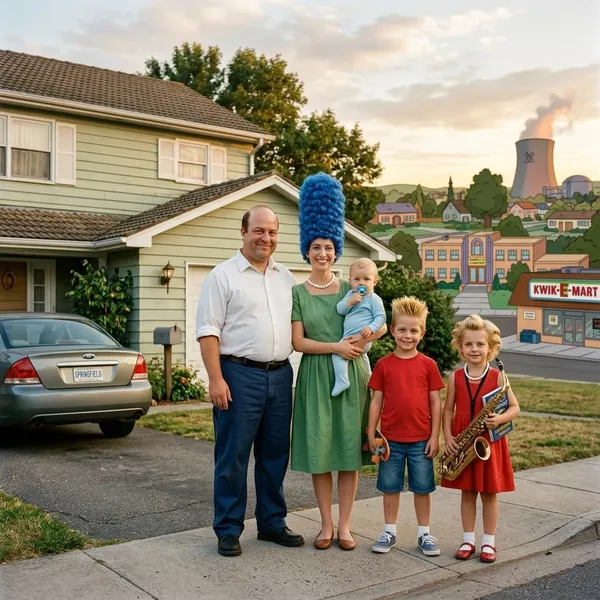
The main Simpsons characters are the five members of the Simpson household: Homer, Marge, Bart, Lisa, and Maggie. If you are a new viewer, these are the names to learn before worrying about the wider Springfield cast, because most stories either begin with them or return to them emotionally.
Homer Simpson as the family father
Homer Simpson is the father of the family and the show's most famous source of impulsive decisions. He works at the Springfield Nuclear Power Plant, spends time at Moe's Tavern, and often turns small problems into much bigger ones.
His appeal comes from the gap between selfish behavior and real affection. Homer can be lazy, reckless, and childish, but the best Homer stories usually leave room for guilt, tenderness, or a messy attempt to make things right.
Marge Simpson as the caring mother
Marge Simpson is the household's stabilizing force. She is usually the one trying to keep the family practical, decent, and emotionally connected while everyone else is chasing trouble, attention, or a bad idea.
- At home: she keeps the family from falling apart.
- In Marge-focused episodes: the show often explores frustration, sacrifice, and identity beyond motherhood.
- As a character design: her tall blue hair makes her instantly recognizable, but her patience is what defines her role.
Bart Simpson as the rebellious son
Bart Simpson is the rebellious son, known for pranks, skateboarding, detention, and a strong dislike of authority. He works best when the story uses him as more than a troublemaker: a good Bart episode often shows insecurity, loyalty, or a need to be taken seriously underneath the attitude.
Lisa Simpson as the intelligent daughter
Lisa Simpson is the intelligent daughter and often the family's moral voice. She cares about learning, music, fairness, and causes that the rest of Springfield may ignore or mock.
For viewers who prefer the show's thoughtful side, Lisa is usually the character to watch. Her stories can be funny, but they also bring in loneliness, idealism, and the difficulty of caring deeply in a town that usually chooses convenience.
Maggie Simpson as the youngest family member
Maggie Simpson is the baby of the family, and her role is mostly visual. Her pacifier, timing, facial reactions, and occasional surprise actions let the show make jokes without dialogue. She is not used as heavily as the others, which is exactly why her bigger moments stand out.
Which Supporting Simpsons Characters Are Most Important?
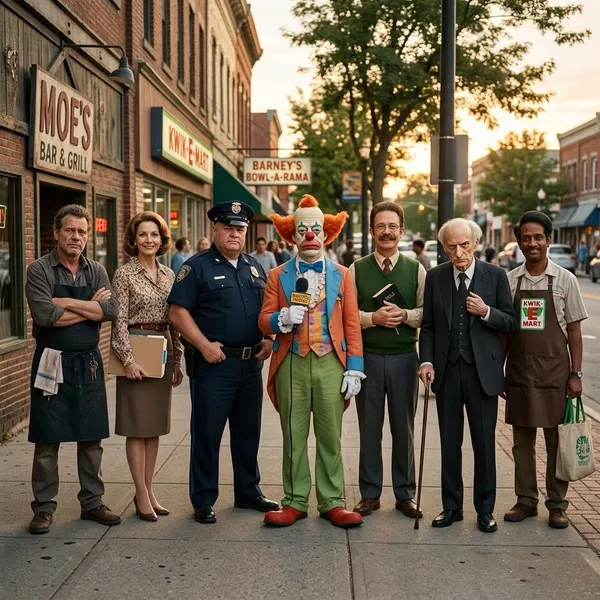
The most important supporting characters are the ones who open up major parts of Springfield. A quick way to judge importance is to ask whether a character gives the show a setting, a type of conflict, or a recurring relationship with the Simpson family.
Mr Burns as Springfield's wealthy villain
Mr Burns is Springfield's wealthy villain and Homer's boss at the nuclear power plant. He gives the show a clear way to satirize money, power, corporate greed, and people who are completely disconnected from ordinary life.
He is funny because he is both dangerous and absurd. One scene can treat him like a serious threat to workers or the town, while another can make him seem physically frail, ancient, and bizarrely out of touch.
Moe Szyslak as Homer's bartender friend
Moe Szyslak runs Moe's Tavern, one of the show's most familiar adult settings. He matters because he is not just "the bartender"; he brings loneliness, resentment, failed ambition, and rough humor into Homer's world outside the house.
Ned Flanders as Homer's neighbor
Ned Flanders is Homer's cheerful, religious, and unusually patient neighbor. His importance comes from contrast: Homer is irritated by a man who is often kinder, calmer, and more responsible than he is.
Ned also keeps the neighborhood stories from being one-note. Sometimes he is the joke, sometimes he is the moral center, and sometimes he shows how exhausting it can be to stay decent around people who take advantage of that decency.
Krusty the Clown as a famous entertainer
Krusty the Clown represents Springfield's entertainment world. On television he is a children's performer; off camera he is cynical, careless, commercial, and often exhausted by his own fame.
If you are making a character list for trivia, costumes, or a fan quiz, Krusty is worth including because he connects directly to Bart while also giving the show a route into jokes about TV, celebrity branding, and advertising.
Principal Skinner as a school figure
Principal Skinner is the key authority figure at Springfield Elementary. He is most useful in Bart and Lisa stories because he turns school into a recurring place of rules, punishments, awkward speeches, and small institutional failures.
Skinner is not a simple villain. His nervousness, need for control, and personal insecurities make him funnier than a standard strict principal.
Simpsons Characters by Role in Springfield
Springfield is easier to understand when characters are grouped by role rather than memorized as one long list. The Simpson family gives the show its center, but the town works because each setting has familiar faces attached to it.
| Role in Springfield | Characters to know first | Why they matter |
|---|---|---|
| Family life | Homer, Marge, Bart, Lisa, Maggie, Grampa | Creates the emotional base of the series |
| Neighbors and friends | Ned, Milhouse, Barney, Moe | Adds friendship, rivalry, and everyday social comedy |
| School | Skinner, teachers, classmates, bullies | Gives Bart and Lisa regular conflict |
| Work and town life | Mr Burns, Smithers, Krusty, local officials | Expands the show into satire about public life |
How Do Simpsons Characters Shape the Show?
The characters shape the show by giving it both focus and range. The family keeps the stories grounded, while the supporting cast lets Springfield comment on school, work, religion, entertainment, politics, and ordinary neighborhood life.
The family creates the main stories
The Simpson family creates the main stories because the most familiar problems begin at home: parenting mistakes, sibling rivalry, marriage stress, money worries, and the need to forgive someone who has made a mess again.
This is also why the show remains easy to enter for new viewers. You do not need deep lore to understand Homer causing trouble, Marge trying to hold things together, Bart testing limits, Lisa feeling unheard, or Maggie reacting silently from the edge of a scene.
Supporting characters expand Springfield
Supporting characters expand Springfield by giving the family different kinds of people to bounce against. Burns brings workplace power, Moe brings adult disappointment, Flanders brings neighborly contrast, Skinner brings school authority, and Krusty brings media culture.
Recurring characters add humor and variety
Recurring characters add humor because viewers already know what to expect from them. Burns will be cold, Moe will be bitter, Flanders will be painfully polite, and Skinner will try to keep order while looking increasingly uncomfortable.
The trick is that familiar characters can still be placed in unfamiliar situations. That is where many strong Simpsons jokes come from: the audience knows the character's usual pattern, then watches it bend under a new problem.
Voice Actors Behind the Animated Simpsons Characters
The voice actors are a huge part of why the characters feel distinct. In animation, a design can make a character recognizable, but the voice usually decides whether that character feels funny, pathetic, warm, threatening, or believable.
Voices behind the Simpson family
Dan Castellaneta voices Homer, Julie Kavner voices Marge, Nancy Cartwright voices Bart, and Yeardley Smith voices Lisa. Maggie is usually nonverbal, with many of her sounds associated with Nancy Cartwright and rare special vocal moments handled separately.
- Homer: panic, warmth, stubbornness, and sudden overconfidence.
- Marge: patience, strain, and emotional steadiness.
- Bart: speed, sarcasm, and childlike defiance.
- Lisa: intelligence, concern, and vulnerability.
Voices behind famous supporting characters
Harry Shearer voices several major supporting characters, including Mr Burns, Ned Flanders, and Principal Skinner. Hank Azaria is also closely tied to Springfield's sound through Moe Szyslak and many other roles.
The important point is not just range. Burns, Flanders, Skinner, and Moe are memorable because their voices reveal personality before the joke even lands.
How voice acting defines each character
Voice acting defines each character by shaping how a line should be heard. Homer's panic makes bad ideas funnier, Marge's restraint makes chaos feel grounded, Burns's politeness makes cruelty colder, and Moe's rough delivery turns bitterness into comedy.
That is why replacing the voices in your memory is difficult. The strongest Simpsons characters are not only drawings with catchphrases; they are performances with timing, texture, and emotional habits.
Conclusion
The best way to understand the Simpsons cast is to learn the family first, then connect the supporting characters to the part of Springfield they represent. Once Homer, Marge, Bart, Lisa, and Maggie are clear, names like Mr Burns, Moe, Ned Flanders, Krusty, and Principal Skinner make much more sense because each one gives the show a different kind of story to tell.