If you are trying to remember the most iconic anime characters with mustaches, start with the designs that would still be recognizable as a silhouette: Whitebeard's crescent, Gol D. Roger's pirate curl, Master Roshi's old-master look, and King Bradley's controlled military trim. A good anime mustache is rarely just decoration; it usually tells you age, status, temperament, or comic energy before the character even speaks.
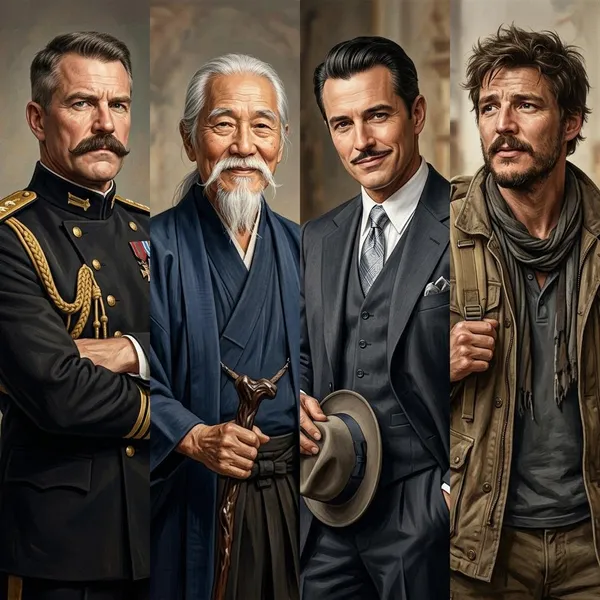
Most iconic anime characters with mustaches
The strongest picks are not just characters who happen to have facial hair. They are characters whose mustache is part of why fans remember them, whether that means authority, comedy, menace, or old-school charisma. If you are new to anime and only want the names most worth recognizing first, the One Piece and Dragon Ball characters here are the safest starting point.
Whitebeard — One Piece
Whitebeard is the obvious first pick because his huge white crescent is one of the clearest facial-hair designs in anime. Despite the name "Whitebeard," the feature above his mouth is a mustache, and it gives him a legendary outline that matches his status as one of the most feared and respected pirates in One Piece.
Gol D. Roger — One Piece
Gol D. Roger's mustache completes the classic Pirate King image: bold, curved, confident, and slightly wild. He does not need constant screen time to feel important because his design already looks like someone whose legend outlived him.
The mustache matters most in flashbacks and historical moments. Roger often appears as a symbol of an era, so the design has to be readable fast. His curved facial hair helps make him feel like both a storybook pirate and a uniquely One Piece figure.
King Bradley — Fullmetal Alchemist
King Bradley's mustache is much quieter than Whitebeard's or Roger's, but that is exactly why it works. The thin, neat trim suits his public image as a disciplined ruler and military leader. It suggests control, age, and authority without making him look exaggerated.
That clean look also supports the darker side of his character. Bradley's face appears respectable at first glance, which makes the danger underneath feel more unsettling once the story reveals what he really is.
Master Roshi — Dragon Ball
Master Roshi's white mustache is part of one of anime's most recognizable mentor designs. With the bald head, sunglasses, beard, and relaxed posture, it tells you almost immediately that he is an old martial arts master, even before the jokes begin.
Roshi is a useful example of a mustache doing two jobs at once. It makes him look aged and credible as a teacher, but it also softens him enough for comedy. If you are watching older Dragon Ball material for the first time, his design explains why the series can treat him as both ridiculous and genuinely important.
Mr. Satan — Dragon Ball
Mr. Satan, also known as Hercule in some versions, has the kind of thick mustache that fits a showman. It makes him look loud, dramatic, and self-important, which is exactly the point. His facial hair supports the public-champion image he wants the world to believe.
Zeff — One Piece
Zeff's mustache gives him the look of someone who has lived through hard years and does not waste words. As a former pirate and veteran chef, he needs to feel stern, practical, and believable as a mentor to Sanji. The facial hair helps sell that immediately.
He is not designed to look glamorous. His mustache works because it feels earned, like part of a face shaped by kitchens, ships, discipline, and sacrifice.
Topman Warcury — One Piece
Topman Warcury's mustache signals seniority and political weight. In a world as visually crowded as One Piece, that kind of facial hair helps him read as an elder authority figure before he has much dialogue.
This is a good pick to know if you follow the later political side of the series. His mustache is not "funny" or decorative in the Mr. Satan sense; it is there to make him feel old, severe, and placed near the top of the power structure.
Satotz — Hunter x Hunter
Satotz is memorable because his mustache adds formality to an already unusual face. During the Hunter Exam, he needs to seem professional, calm, and slightly strange, and the facial hair helps create that exact impression without making him look like a typical commander or mentor.
Dot Pixis — Attack on Titan
Dot Pixis has a commander's mustache: simple, mature, and easy to recognize among uniforms and military faces. In Attack on Titan, where many officers can blur together during tense strategy scenes, that visual marker helps him stand apart.
His design fits his role best when the situation is unstable. Pixis often feels like someone who can think under pressure, and the mustache reinforces the sense that he has survived enough crises to stay calm when younger soldiers cannot.
Genryusai Yamamoto — Bleach
Genryusai Yamamoto's mustache works together with his long beard, scarred face, and severe posture to create an elder-warrior design that feels heavy with history. He looks less like a normal authority figure and more like a living institution.
If you are comparing mustached anime characters by intimidation rather than recognizability, Yamamoto ranks near the top. His facial hair is not playful or stylish; it adds to the impression of discipline, age, and overwhelming command.
Why mustaches stand out in anime
Mustaches stand out in anime because they are quick visual shorthand. In a few seconds, they can tell a viewer that a character is older, more experienced, more theatrical, or more dangerous than the clean-shaven heroes around him. That matters in series with large casts, fast introductions, and character designs built for instant recognition.
They are also less common than bright hair, special uniforms, masks, or weapons. So when a character has a strong mustache, it naturally becomes one of the first details fans use to describe him.
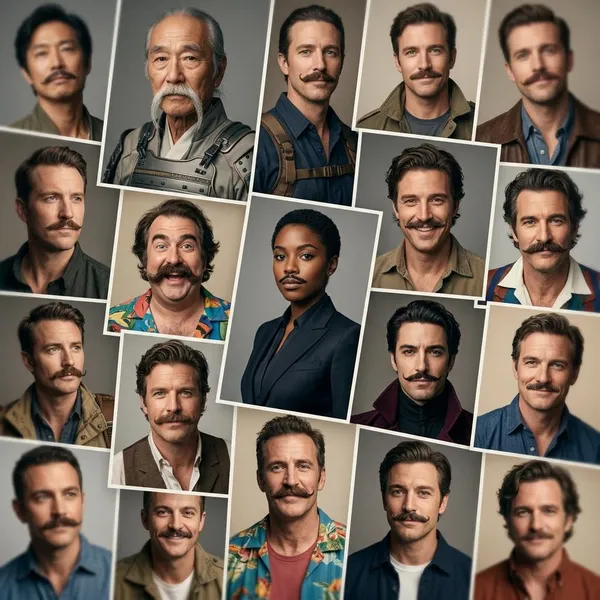
They make older characters easy to recognize
A mustache is one of the fastest ways anime marks a character as belonging to an older generation. That is useful for mentors, commanders, fathers, rulers, retired fighters, and legendary figures who need to feel separate from younger protagonists.
- New viewers: facial hair makes it easier to track older side characters in crowded casts.
- Returning fans: a strong mustache helps with quick recognition in flashbacks, posters, and group shots.
- Cosplayers and fan artists: the mustache often becomes the feature that makes the design readable.
They reinforce authority and experience
Mustaches often carry an old-fashioned sense of rank. King Bradley looks controlled, Dot Pixis looks seasoned, and Yamamoto looks ancient and commanding. The mustache does not create their authority by itself, but it supports the first impression the story wants you to have.
They create distinctive character designs
A mustache changes the shape and mood of a face more than many small accessories do. Whitebeard's crescent feels mythic, Roger's curve feels adventurous, Roshi's white mustache feels classic, and Mr. Satan's thick style feels theatrical. Remove those details, and each design becomes less immediate.
That is why mustaches work so well in anime merchandise, fan art, and quick online discussions. They give fans an easy visual handle. For a minor character, that can prevent the design from being forgettable; for a major character, it can become part of the legend.
Conclusion
The best mustached anime characters are memorable because the facial hair actually fits the role: Whitebeard looks legendary, Roger looks like a pirate king, Bradley looks controlled, Roshi looks like a classic master, and Mr. Satan looks like a performer. If you only remember a few, start with the designs where the mustache would still identify the character at a glance; those are the ones that show how much one simple feature can add to an anime face.