If you are trying to keep the anime fruits basket characters straight, start with the emotional roles, not just the zodiac animals. Tohru, Kyo, Yuki, Shigure, and Akito carry the main conflict, while the wider Sohma family and Tohru's friends explain why the story feels so personal. For a first watch, knowing who affects whose growth matters more than memorizing every name at once.
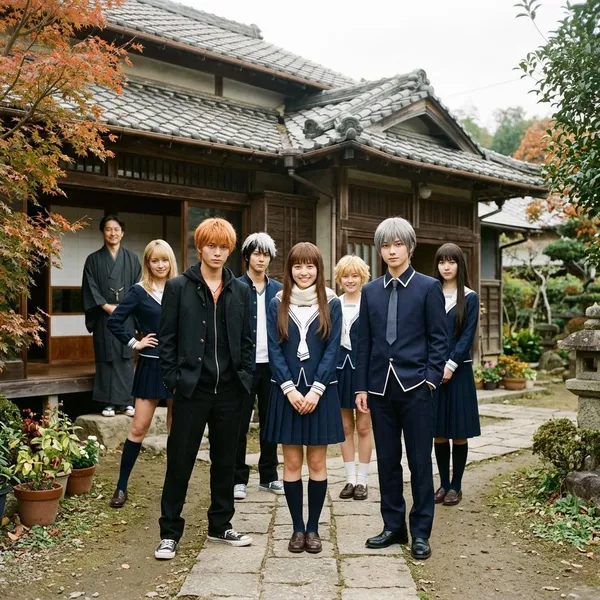
Main Fruits Basket characters
| Character | Why they matter first |
|---|---|
| Tohru Honda | Connects the Sohmas to warmth, grief, and healing. |
| Yuki Sohma | Shows the pain hidden behind admiration and status. |
| Kyo Sohma | Represents rejection, shame, and the need to be accepted fully. |
| Shigure Sohma | Adds humor, shelter, and uncomfortable manipulation. |
| Akito Sohma | Stands at the center of the Sohma family's fear and control. |
Tohru Honda as the heart of the story
Tohru Honda is the character who makes the story open up. She is gentle, but not weak; her kindness comes from loss, responsibility, and a strong habit of caring for people even when she is struggling herself. That is why the Sohmas do not simply "like" her. Many of them start to feel safe around her.
For a first-time viewer, Tohru is the best anchor. When the zodiac curse, family politics, and rivalries become complicated, her reactions show what the story wants you to notice: who is hurting, who is hiding it, and who needs a different kind of love than they expected.
Yuki Sohma as the Rat
Yuki Sohma is the Rat, and his public image is almost too perfect. At school he is admired as calm, beautiful, and distant, but that admiration does not make him feel free. His arc is about learning how to become a person instead of a symbol.
Watch Yuki's smaller changes rather than waiting for dramatic speeches. His growth appears in the way he makes friends, speaks more honestly, and slowly stops measuring himself through the Sohma family's expectations.
Kyo Sohma as the Cat
Kyo Sohma is linked to the Cat, the animal left outside the official zodiac. That exclusion shapes nearly everything about him: his anger, his rivalry with Yuki, and his belief that rejection is inevitable. His temper is loud, but the real issue is fear.
- First impression: aggressive, impulsive, easy to provoke.
- What is underneath: shame, loneliness, and a need for acceptance.
- Why he matters: his story asks whether someone treated as unwanted can believe they are lovable.
Shigure Sohma as the Dog
Shigure Sohma, the Dog, is funny and relaxed on the surface, which makes him easy to underestimate. He gives Tohru, Yuki, and Kyo a home, but he is not just the harmless adult in the room. He often knows more than he says and pushes events in ways that can feel caring, selfish, or both.
That mix is what makes him worth watching closely. If you are rewatching the series, Shigure's casual comments often carry more intention than they first appear to.
Akito Sohma as the family head
Akito Sohma is the head of the Sohma family and the source of much of the fear surrounding the zodiac members. Akito's control is emotional as much as practical: the curse is tied to loyalty, dependence, and the belief that leaving the family bond is impossible.
Akito is not a simple obstacle placed in front of the heroes. The character causes real harm, but the story also shows how isolation and inherited power can twist someone into protecting a bond through cruelty. That does not excuse Akito; it makes the family system more disturbing.
Sohma Zodiac characters and Kyo the Cat
The zodiac curse gives Fruits Basket its fantasy hook, but the animals are not just cute labels. Each cursed Sohma carries a role inside the family, and that role affects how they handle shame, affection, rebellion, or obedience. If you are trying to remember the zodiac members, connect each one to their emotional pattern rather than only their animal.
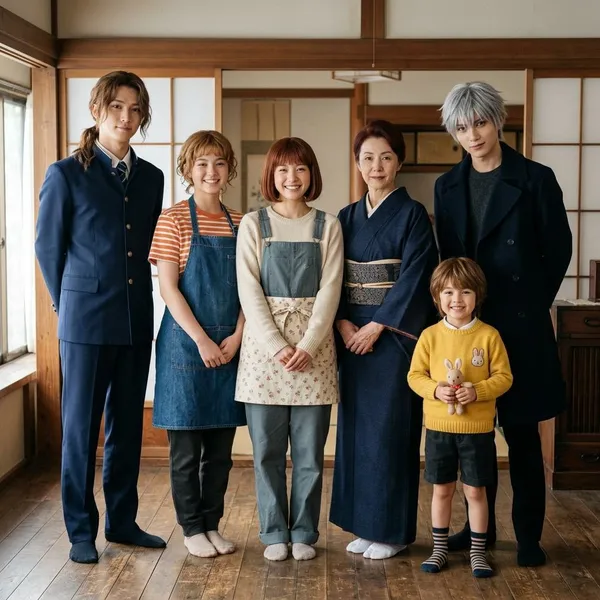
Yuki the Rat and Kyo the Cat
Yuki and Kyo are often framed as opposites: the Rat is accepted and admired, while the Cat is rejected and blamed. The painful part is that neither boy experiences his position as a gift. Kyo envies Yuki's status, while Yuki feels trapped by a polished image that has never protected him emotionally.
Their rivalry becomes easier to understand if you treat it less like a normal school feud and more like two damaged people reacting to roles they never chose.
Shigure the Dog and Kagura the Boar
Shigure and Kagura show two very different ways the curse can shape a personality. Shigure hides sharp intentions behind charm, while Kagura throws her emotions outward with force. Kagura's attachment to Kyo can look comic at first, but it is also tangled with guilt and a wish to prove her feelings are real.
Hatori the Dragon and Ayame the Snake
Hatori Sohma is the Dragon, though his transformed form is a seahorse. He is restrained, responsible, and marked by a painful past, so his calmness often feels more like self-control than peace.
Ayame, the Snake, moves in the opposite direction: dramatic, theatrical, and impossible to ignore. His energy can seem silly until his attempts to repair his relationship with Yuki reveal something more sincere. Together, Hatori and Ayame are a useful contrast: one withdraws under emotional weight, the other performs over it.
Momiji the Rabbit and Hatsuharu the Ox
Momiji Sohma, the Rabbit, looks cheerful enough to be mistaken for a light character, but his story carries real sadness. His warmth feels stronger once you realize it is not ignorance; he understands loss and still chooses tenderness.
Hatsuharu Sohma, the Ox, is steadier on the surface, with a more volatile side that appears under pressure. He is memorable not only for that split but for his loyalty. In a family where many people are afraid to act honestly, Haru often protects the people he cares about with unusual directness.
Kisa the Tiger and Hiro the Sheep
Kisa Sohma, the Tiger, and Hiro Sohma, the Sheep, show how young the damage in the Sohma family can begin. Kisa's silence after being hurt is one of the clearer examples of pain becoming withdrawal. Hiro, meanwhile, can sound harsh and childish, but his jealousy and fear come from emotions he is too young to manage gracefully.
If you are watching with younger viewers or revisiting the story as an adult, their scenes may feel different. They make the curse less like a romantic fantasy problem and more like a family pattern that reaches children before they can defend themselves.
Rin the Horse, Ritsu the Monkey, and Kureno the Rooster
Rin, also called Isuzu Sohma, is the Horse and one of the most guarded characters in the series. Her intensity makes sense once her history becomes clearer; she is not being difficult for drama's sake, she is trying to survive and break free.
- Rin: resistance, exhaustion, and the need for freedom.
- Ritsu: anxiety so strong it shapes every interaction.
- Kureno: gentleness mixed with passivity, which can still allow harm to continue.
Key supporting Fruits Basket characters
The supporting characters are not side decoration. They show what the main cast looks like in safer spaces, outside the heaviest parts of the Sohma curse. Tohru's friends give her chosen family, Kazuma gives Kyo a rare model of steady adult love, and Yuki's school connections help him build an identity that does not depend on being the "prince."
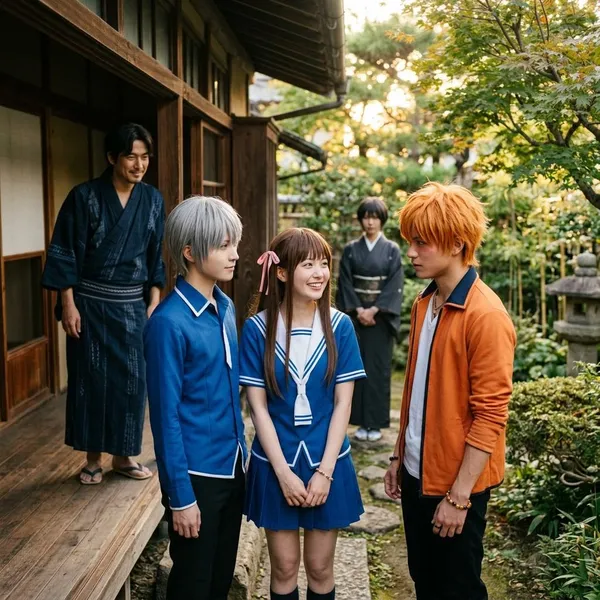
Arisa Uotani as Tohru's loyal friend
Arisa Uotani is blunt, protective, and deeply loyal to Tohru. Her tough image matters because it is not empty attitude; she has known loneliness and bad choices, so Tohru's kindness means something concrete to her.
Arisa also keeps Tohru from feeling like a saintly figure floating above ordinary life. Their friendship has teasing, worry, honesty, and fierce protection, which makes it feel lived-in rather than decorative.
Saki Hanajima as Tohru's protective friend
Saki Hanajima brings a quieter kind of protection. Her "waves" make her unusual, but her real strength is how clearly she sees people. She does not need to be loud to make others back off when Tohru is being hurt.
Kyoko Honda as Tohru's late mother
Kyoko Honda shapes Tohru even though she is gone before the main story begins. Her memory gives Tohru warmth and direction, but it also creates pressure. Tohru wants to honor her mother so completely that she sometimes hides her own needs.
That tension keeps Kyoko from being only a comforting memory. She represents love, grief, and the complicated way someone can continue guiding a life after death.
Kazuma Sohma as Kyo's mentor
Kazuma Sohma is Kyo's mentor and father figure, and his importance is easy to measure: he gives Kyo acceptance that is not based on performance. He does not pretend Kyo's pain is simple, but he also refuses to treat him as a monster.
For readers comparing adult figures in the series, Kazuma is one of the clearest examples of care with responsibility. He is gentle, but not passive; honest, but not cruel.
Machi Kuragi as part of Yuki's growth
Machi Kuragi matters because she sees Yuki outside the role other students give him. Their connection is quiet and awkward in a way that fits Yuki's growth. He does not have to perform perfection around her, and that makes the relationship feel safe rather than idealized.
Kakeru Manabe as Yuki's close friend
Kakeru Manabe brings a messy, casual energy that Yuki badly needs. He jokes, pushes, interrupts, and refuses to treat Yuki as untouchable. That can be irritating, but it also gives Yuki practice being an ordinary teenager with an ordinary friend.
This is especially useful after the heavier Sohma scenes. Kakeru helps move Yuki's story into daily life, where growth happens through student council work, banter, and small honest reactions instead of family drama alone.
Key relationships in Fruits Basket
The relationships are where Fruits Basket becomes more than a character list. Romance matters, but so do friendship, family obligation, mentorship, rivalry, and chosen support. If you are deciding what to pay attention to during a rewatch, follow the relationships that change how a character sees themselves.
Tohru and Kyo's growing bond
Tohru and Kyo's bond works because it grows through recognition, not instant romance. Tohru accepts Kyo before he believes he deserves it, while Kyo becomes one of the few people who notices when Tohru is hiding sadness behind cheerfulness.
Their relationship is powerful because both characters change. Kyo learns that being seen fully does not have to end in rejection, and Tohru learns that caring for someone also means admitting what she wants and fears.
Tohru and Yuki's emotional connection
Tohru gives Yuki warmth and safety, but their bond is not written as a simple rival path to Kyo. Yuki's feelings help him understand what kind of care he has been missing and what kind of future he wants.
Yuki and Kyo's rivalry
Yuki and Kyo fight because each one represents something painful to the other. Kyo sees Yuki as accepted and legitimate. Yuki sees Kyo's anger without understanding, at first, how much rejection sits behind it.
- Common mistake: reading the rivalry as only jealousy.
- Better read: both boys are trapped by family roles that distort how they see each other.
- What changes: they do not become magically alike, but they gain a more honest recognition of each other's pain.
Akito and the Sohma family
Akito's relationship with the Sohma family is built on fear, dependence, and the belief that the zodiac bond must never break. That is why Akito's control reaches so far even when the character is not physically present in a scene.
This relationship is the darkest part of the story because it turns the desire to be loved into a system of harm. The family cannot heal only by comforting individual members; they have to face the structure that taught them fear was the same thing as loyalty.
Tohru, Uotani, and Hanajima's friendship
Tohru, Arisa Uotani, and Saki Hanajima offer one of the healthiest bonds in the series. Their friendship is not perfect because it is dramatic; it is strong because it is steady. They check on each other, protect each other, and create a kind of family that is chosen rather than inherited.
Conclusion
The cast of Fruits Basket is easiest to remember when you connect each character to the emotional job they perform in the story. Tohru opens the door, Kyo and Yuki show two forms of trapped pain, Akito exposes the damage at the center of the family, and the supporting characters prove that healing usually comes through specific relationships, not grand speeches. If you keep those roles in mind, the large cast feels much less confusing and much more rewarding to watch.