If you are trying to keep the anime my hero academia characters straight, start with the people who change the story most: Deku, Bakugo, Todoroki, Ochaco, All Might, Aizawa, the key Class 1-A students, and the major villains. The cast is big, but you do not need to memorize everyone at once; learn each character by role, Quirk, and the relationship that pulls them into the main conflict.
Main My Hero Academia characters
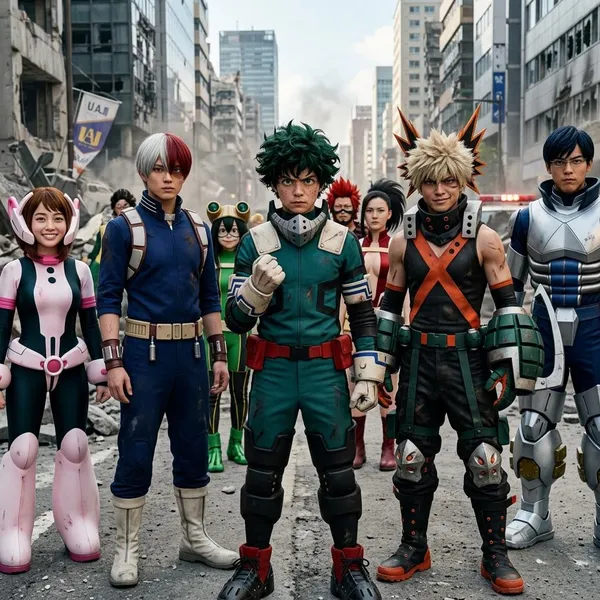
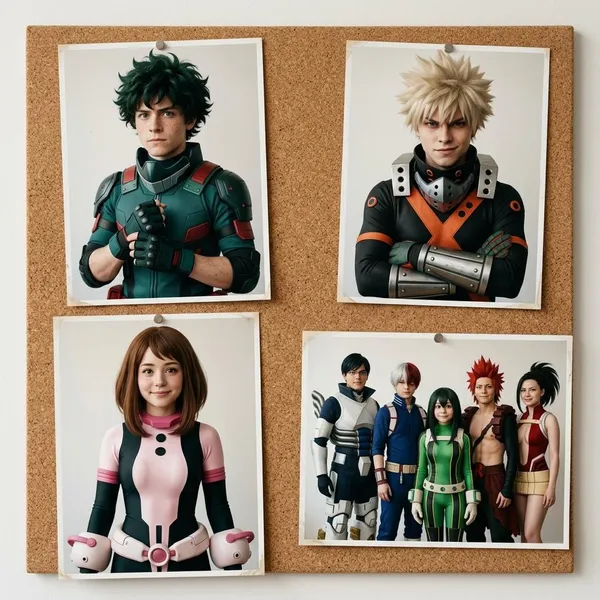
The main cast is easiest to understand in two layers. First are the students who carry the school story: Deku, Bakugo, Todoroki, and Ochaco. Around them are the adults who shape their path, especially All Might and Shota Aizawa.
If you are just starting the anime, focus on these characters before worrying about the full roster. If you are returning after a break, pay extra attention to how their goals clash, because the bigger battles only matter once those personal stakes are clear.
Izuku Midoriya and One For All
Izuku Midoriya, usually called Deku, is the central character. He begins without a Quirk in a world where powers are normal, which makes his dream of becoming a hero feel almost impossible. His real strength at the start is not power but observation: he studies heroes, notices patterns, and thinks carefully under pressure.
One For All changes his future, but it does not make him instantly ready. The power is too much for his body early on, so his growth is partly about restraint. That is the best way to read Deku: not as a chosen hero who wins easily, but as someone learning how to carry a dangerous inheritance without losing his own kindness.
Katsuki Bakugo and Explosion
Bakugo is Deku's childhood rival, and his Explosion Quirk makes him fast, loud, and hard to ignore in combat. He is not just "the angry one," though. His pride, talent, and fear of being surpassed all shape the way he treats Deku and the rest of Class 1-A.
Shoto Todoroki and Half Cold Half Hot
Shoto Todoroki's Half Cold Half Hot Quirk gives him one of the clearest visual identities in the anime: ice on one side, fire on the other. His power is strong from the beginning, but the emotional weight comes from why he refuses to use part of it. His connection to Endeavor turns every fight into more than a display of strength.
Todoroki is especially important if you like character arcs built around family conflict. His story asks whether someone can use an inherited power without accepting the harm attached to it.
Ochaco Uraraka and Zero Gravity
Ochaco Uraraka's Zero Gravity Quirk lets her make people and objects float, which gives her a useful mix of rescue ability, mobility, and tactical support. Her motivation is also refreshingly grounded: she wants to become a hero partly so she can help her family financially.
She often brings warmth to Class 1-A, but reducing her to "the nice girl" misses the point. Ochaco becomes more interesting when she starts treating hero work as something that requires courage, quick thinking, and emotional honesty.
All Might as Deku's mentor
All Might is the symbol of peace and the hero who chooses Deku as the next holder of One For All. That choice gives Deku a future, but it also places a heavy legacy on his shoulders. Their bond works because it is not only about training; it is about belief, pressure, and learning what a symbol costs.
- For Deku: All Might proves that someone can believe in him before the world does.
- For All Might: Deku becomes proof that heroism can survive beyond one famous figure.
Shota Aizawa as Class 1-A teacher
Shota Aizawa, also known as Eraser Head, is Class 1-A's homeroom teacher. His Quirk can erase another person's Quirk while he is looking at them, but his real value is judgment. He is strict because the students are training for a job where bad habits can get people hurt.
Aizawa is the adult to watch when you want to understand U.A. as a school rather than just a stage for fights. He rarely gives easy praise, yet his protection of the class makes his care obvious.
Other Class 1-A characters
Class 1-A can feel crowded at first, so it helps to group the supporting students by what they add to the class. Some are leaders, some are steady support, some bring defensive strength, and others show how creative Quirk use can be.
A practical way to remember them is to connect each student to one clear hook:
- Iida: speed, discipline, and class leadership.
- Tsuyu: calm rescue instincts and frog-like movement.
- Kirishima: toughness, loyalty, and defensive courage.
- Momo: planning, knowledge, and item creation.
- Tokoyami: controlled darkness and risk management.
- Mina: speed, energy, and flexible acid use.
If you are watching casually, you can learn these names as they become relevant. If you are trying to follow fan discussions or later arcs, learning this group early makes team battles much easier to understand.
Tenya Iida
Tenya Iida is the class representative, and his Engine Quirk gives him high-speed movement through engine-like structures in his legs. His role is not just "fast student." Iida represents rules, responsibility, and the pressure of living up to a heroic family image.
His best moments often come when that discipline is tested. When emotion pushes him toward poor choices, the story uses it to show that even the most responsible student still has to learn control.
Tsuyu Asui
Tsuyu Asui, often called Tsu, is one of the easiest Class 1-A students to remember because her frog-based Quirk is so visually clear. She can jump, swim, cling to surfaces, and use her tongue in rescue or combat situations.
Her quiet value is practicality. In a chaotic scene, Tsuyu is often the student who reads the situation without overreacting, which makes her feel more reliable than flashy.
Eijiro Kirishima
Kirishima's Hardening Quirk is simple: he makes his body tougher. That simplicity is exactly why he works so well. His power matches his personality, because he wants to be the kind of hero who stands firm when others need protection.
He is a good character to watch if you prefer growth that comes through fear rather than perfection. Kirishima is brave, but the anime makes clear that bravery does not mean never being scared.
Momo Yaoyorozu
Momo Yaoyorozu can create non-living objects from her body as long as she understands their structure. That makes her one of the most flexible students in Class 1-A, but it also means she has to think quickly when the pressure rises.
Her arc is useful because it shows intelligence as a real combat skill. Momo's biggest obstacle is often confidence, not lack of talent, which makes her victories feel earned instead of automatic.
Fumikage Tokoyami
Fumikage Tokoyami has one of the most distinctive designs in the class, and his Dark Shadow Quirk gives him a powerful companion-like force. The catch is control: darkness can make Dark Shadow stronger, but also harder to manage.
That trade-off makes Tokoyami more interesting than a character with a simple power boost. He has to understand the situation before using his strength fully.
Mina Ashido
Mina Ashido brings bright energy to Class 1-A, but her Acid Quirk is more useful than her playful personality might suggest. She can use acid for offense, defense, and movement depending on the scene.
For first-time viewers, Mina is easy to recognize because her design, personality, and fighting style all stand out quickly. Her role is not always central, but she helps the class feel alive rather than built only around the top students.
Key Pro Heroes and teachers
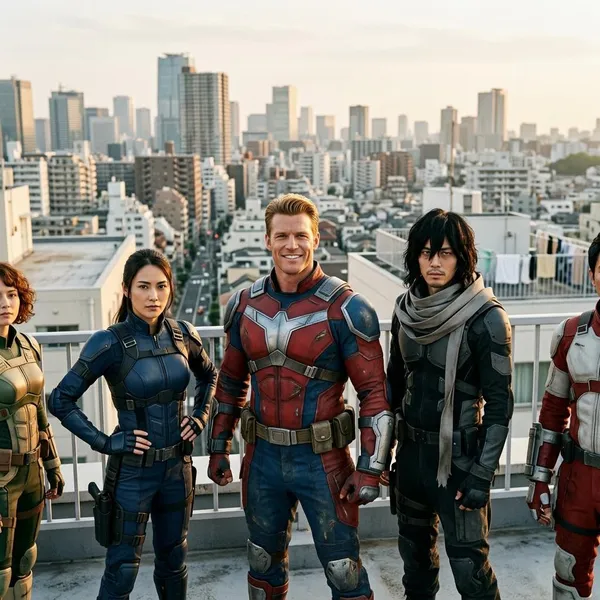
The adult heroes show what the students are training to become, and they are not all built from the same ideal. Some inspire people, some work through discipline, some rely on speed or secrecy, and some reveal the uncomfortable gap between public success and private failure.
Endeavor
Endeavor, Enji Todoroki, is one of the strongest pro heroes and Shoto's father. His flame power and career success make him impressive on the surface, but his story is mainly about the damage caused by ambition without care.
He matters because he complicates the idea of a "top hero." Endeavor can save people in public and still have caused serious harm at home. That tension is what makes him one of the most layered adults in the anime.
Hawks
Hawks is fast, observant, and more strategic than his relaxed personality first suggests. His feather-based Quirk lets him rescue, scout, attack, and respond to several problems at once.
His role is especially useful in later arcs because he shows a different kind of hero work: quiet information-gathering, risk-taking, and decisions made before the public knows what is happening.
Best Jeanist
Best Jeanist looks like a style-first hero, but his fiber-control Quirk is precise and practical. He can restrain enemies, manage crowds, and turn clothing into a tool for control.
He is worth remembering because he proves that a strange-looking Quirk can become powerful through technique. In a series full of explosive abilities, Best Jeanist shows the value of calm execution.
Mirko
Mirko is a high-impact pro hero whose rabbit-like abilities give her speed, agility, and brutal close-range strength. She leaves an impression because her fighting style is direct: she does not wait for perfect conditions before acting.
For viewers who prefer action-heavy characters, Mirko is one of the clearest examples of physical courage in the pro hero world. Her scenes also show how dangerous hero work becomes when there is no safe distance from the enemy.
Present Mic
Present Mic, Hizashi Yamada, is a U.A. teacher with a voice-based Quirk that can work as a powerful sound attack. His loud radio-host energy contrasts sharply with Aizawa's quiet style, which helps the school staff feel more varied.
He is not only comic relief. As the story expands, his connections to other teachers and past events give him more emotional weight than his first impression suggests.
Midnight
Midnight, Nemuri Kayama, is a U.A. teacher and pro hero whose Quirk releases a sleep-inducing aroma. Her public image is theatrical, but her role at the school is serious: she helps train students for a profession where presentation and control both matter.
She adds another angle to the adult cast because her usefulness is not based on raw force. The anime often uses teachers like Midnight to show that hero work includes restraint, timing, and knowing how to end a fight without simply overpowering everyone.
Major My Hero Academia villains
The villains in My Hero Academia are important because they do not all challenge the heroes in the same way. Some are physical threats, some are ideological threats, and some reveal people who were failed, twisted, or used by the society around them.
Tomura Shigaraki
Tomura Shigaraki begins as the unstable leader of the League of Villains, but he becomes far more central as the anime develops. His Decay Quirk destroys what he touches, making him frightening both visually and thematically.
The reason Shigaraki matters is not only that he becomes stronger. He represents what happens when rage, neglect, and manipulation are allowed to grow into something organized and destructive.
All For One
All For One is the major mastermind behind much of the villain side. His Quirk lets him steal and distribute other Quirks, but his real danger comes from how he uses power to control people over time.
He works as All Might's opposite. All Might gives people hope by standing in front of them; All For One builds fear by pulling strings from behind the scenes.
Dabi
Dabi is known for his blue flames, scarred appearance, and cold attitude, but his importance grows because of his link to the Todoroki family. He turns a private family wound into a public crisis.
If you are tracking the emotional side of the anime, Dabi is not optional. His presence forces the story to deal with consequences that cannot be solved by winning a single fight.
Himiko Toga
Himiko Toga can transform into people after consuming their blood, which makes her dangerous in both combat and infiltration. What makes her unsettling is the way she connects affection, identity, and violence.
Twice
Twice can create duplicates, a power that could be overwhelming in the right situation. His real struggle, though, is with identity and trust in his own self.
He is one of the most tragic villains because his loyalty feels painfully human. The League gives him belonging, even though that belonging pulls him deeper into violence.
Stain
Stain is dangerous because of his ideology as much as his Quirk. He believes many public heroes are fake and unworthy, and his actions force both heroes and viewers to think about what real heroism should mean.
His screen time is limited compared with larger villains, but his influence lasts. Stain changes the conversation around hero society by attacking its image, not just its people.
Key relationships in My Hero Academia
The relationships are what make the powers feel personal. Deku's growth depends on All Might and Bakugo, Todoroki's choices are tied to Endeavor, and Shigaraki's path is shaped by All For One.
If you only memorize Quirks, the cast can feel like a list. If you track the relationships, the anime becomes much easier to follow because you can see why each fight matters emotionally.
Deku and Bakugo's rivalry
Deku and Bakugo's rivalry begins with imbalance: Bakugo has confidence and power, while Deku has admiration, fear, and no Quirk. As Deku grows, the rivalry becomes less about one boy chasing the other and more about two different ideas of strength colliding.
The important shift is respect. They do not become simple best friends overnight, but their relationship becomes healthier once both are forced to admit what the other has always had.
Deku and All Might's mentorship
All Might gives Deku One For All, but the mentorship is not only a transfer of power. He gives Deku permission to believe his dream is possible.
Deku also changes All Might. As All Might weakens, he has to learn how to guide the future without being the person who solves every crisis himself.
Todoroki and Endeavor's family conflict
Todoroki and Endeavor's conflict is one of the most emotionally serious parts of the anime. Shoto wants to define himself apart from his father's ambition, while Endeavor has to face the damage he caused in pursuit of status.
Shigaraki and All For One's connection
Shigaraki and All For One mirror Deku and All Might in a darker way. Both relationships involve inheritance, but All Might's mentorship is built on trust while All For One's influence is built on manipulation.
Conclusion
The easiest way to understand the cast is to stop treating every name equally. Learn the core students first, then the adults who define hero society, then the villains who challenge it, and finally the relationships that connect everything. Once those pieces are clear, the larger world of My Hero Academia feels far less crowded and much more rewarding to follow.