Anime characters with heterochromia are easiest to understand when you separate true mismatched eyes from temporary power effects. Characters like Shoto Todoroki and the Rozen Maiden twins have different-colored eyes as part of their normal design, while characters such as Lelouch or Kaneki are better treated as special eye-effect cases.
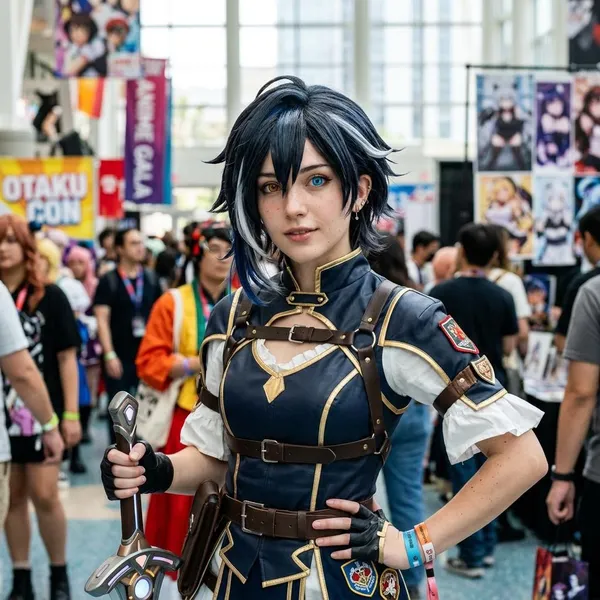
Best-known anime characters with heterochromia
The most useful way to judge a heterochromia character is to ask one simple question first: are the two eye colors part of the character's regular appearance? If yes, the character fits much more cleanly than someone whose eye changes only during a fight, transformation, or supernatural state.
Shoto Todoroki — My Hero Academia
Shoto Todoroki is probably the first name many fans think of because his heterochromia is tied so tightly to his whole design. One eye is gray and the other is turquoise, matching the split between his ice and fire sides.
What makes the detail work is that it does not sit alone. His hair, scar, family background, and powers all point to the same conflict: two inherited forces he has to live with and eventually define for himself.
Suiseiseki — Rozen Maiden
Suiseiseki has one green eye and one red eye, which fits the ornate, slightly eerie doll aesthetic of Rozen Maiden. The contrast is bold enough to recognize instantly, but it also suits the series' taste for symmetry, symbolism, and unsettling beauty.
Souseiseki — Rozen Maiden
Souseiseki uses heterochromia in a more interesting paired way because her colors mirror Suiseiseki's. That makes the twins feel connected at a glance while still keeping each one visually distinct.
Neko — K
Neko from K has a playful, catlike presence, and her mismatched eyes support that feeling well. In a show already built around color, style, and supernatural identity, the eye contrast feels like part of the world rather than a random decoration.
- Best fit for: viewers who like stylish supernatural character designs.
- What to notice: the eyes add mystery without making her look dark or threatening.
Isaac Foster — Angels of Death
Isaac Foster, also known as Zack, shows the rougher side of this design choice. His different-colored eyes add to an unstable, dangerous impression, which fits the psychological horror tone of Angels of Death.
With Zack, the point is not elegance. The uneven look makes him feel unpredictable, so the heterochromia supports the mood of the character rather than softening it.
Mihoko Fukuji — Saki
Mihoko Fukuji is a quieter example. Her heterochromia gives her a distinct look in Saki, but it does not automatically signal horror, battle powers, or hidden danger.
That makes her useful to remember if you only associate mismatched eyes with fantasy or supernatural anime. Sometimes the trait simply makes a calmer character easier to recognize.
Why heterochromia stands out in anime
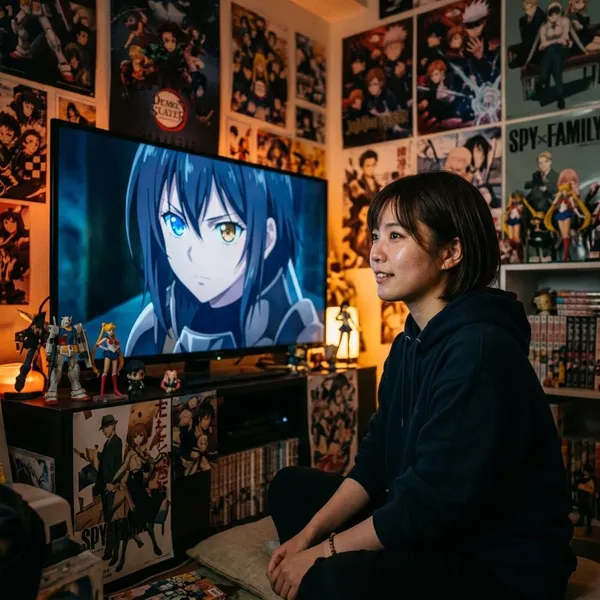
Eyes carry a lot of weight in anime. Close-ups, emotional reactions, and stylized color palettes all make the face a major storytelling tool, so a character with two different eye colors naturally pulls attention.
The effect is especially strong in two common viewing situations: when a new viewer is trying to remember a large cast, and when a fan is studying why a design feels memorable. In both cases, heterochromia gives the eye a clear place to land.
It makes characters easy to recognize
A mismatched eye color is one of the fastest visual shortcuts a character can have. In a crowded cast, it helps viewers identify someone before names, uniforms, or story roles fully sink in.
This is also why the trait works so well in posters, thumbnails, figures, and fan art. A face with a clear eye-color split is easier to remember than a design that relies only on a hairstyle or outfit.
It adds visual contrast
Two eye colors create immediate contrast on the face. A red-blue split can feel tense or divided, while softer combinations can make a character seem elegant, strange, or dreamlike.
It can reflect identity or powers
Heterochromia often suggests duality, mixed identity, unusual lineage, or a power-related theme, even when the story never uses the word itself. Viewers are trained to look at anime eyes for clues, so a mismatch rarely feels invisible.
- Identity use: the eyes hint at inner conflict, heritage, or two sides of a character.
- Design use: the eyes make the character stand out without needing extra accessories.
- Power-adjacent use: the eyes may echo abilities, but only permanent mismatched eyes fit true heterochromia cleanly.
Not every different-colored eye is true heterochromia
The safest check is whether the character's eyes are different in their normal, everyday state. If the difference appears only when a power activates, a transformation starts, a curse shows, or a contact lens is worn, it is better described as an eye effect rather than true heterochromia.
Power-based eyes — Lelouch Lamperouge
Lelouch Lamperouge from Code Geass has one of the most iconic eye effects in anime, but his Geass eye is tied to a supernatural ability. Because it appears as a power state rather than a normal permanent eye-color difference, it should not be counted as true heterochromia.
Transformation eyes — Kurumi Tokisaki
Kurumi Tokisaki from Date A Live is often brought into the conversation because her asymmetrical eye design is so memorable. The important nuance is that her unusual eye imagery is closely tied to her supernatural presentation and time-based symbolism.
For a moodboard or "characters with striking eyes" list, Kurumi fits easily. For a strict heterochromia list, she belongs in the separate category of transformation or power-linked eye design.
Ghoul eyes — Ken Kaneki
Ken Kaneki from Tokyo Ghoul is another case where the visual effect can be mistaken for heterochromia. His altered eye is connected to his ghoul condition and emotional state, not a stable natural difference between both eyes.
That does not make the design less meaningful. It just means the meaning is about transformation, identity pressure, and loss of ordinary humanity rather than ordinary mismatched eye color.
Colored contacts — Kobato Hasegawa
Kobato Hasegawa from Haganai shows the simplest non-heterochromia case: colored contacts. If the mismatch comes from a removable accessory, it is styling, role-play, or self-presentation rather than a physical trait.
- Count it as heterochromia: the character normally has two different eye colors.
- Do not count it strictly: the effect appears only during powers, transformations, or special states.
- Treat it as styling: the difference comes from contacts or costume choices.
Conclusion
The best examples of heterochromia in anime are memorable because the eye colors do real design work: Todoroki's split reinforces conflict, the Rozen Maiden twins use mirrored contrast, and characters like Neko, Zack, and Mihoko show different moods the trait can create. If you want an accurate list, check the character's normal appearance first; if the eye difference comes from a power, transformation, or accessory, it is still a striking anime eye design, just not true heterochromia.