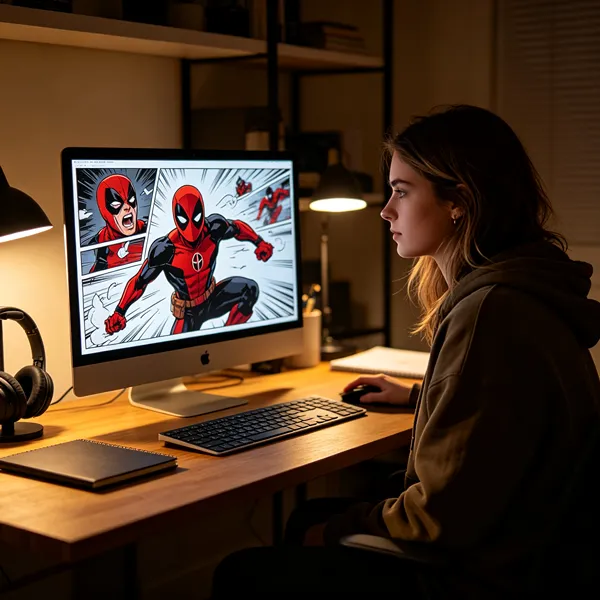
If you are looking for a batman year one motion comic, the useful answer is: there does not appear to be a major official DC release sold specifically under that label. What you are probably seeing is a mix of the original 1987 comic, the official 2011 animated film, an official audio adaptation, and fan-made videos that animate comic panels. The best choice depends on whether you want the source material, an official screen version, audio, or the motion-comic style itself.
What is the original Batman Year One?
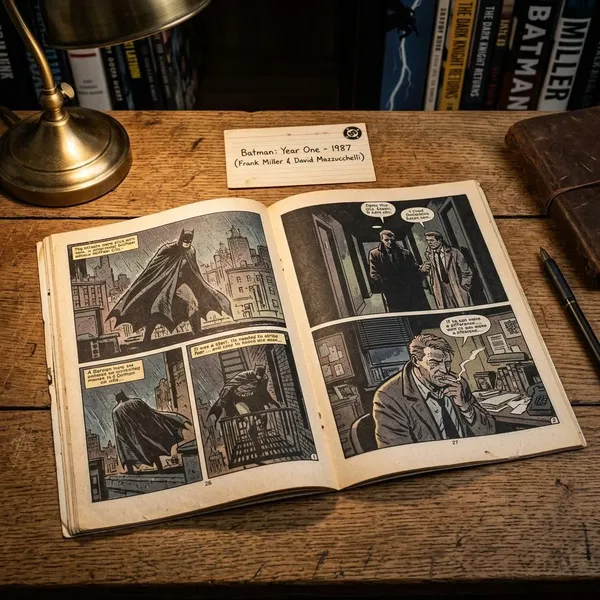
Batman: Year One is the source all of these versions point back to. It is a short, grounded Batman origin story about Bruce Wayne becoming Batman while Jim Gordon arrives in Gotham and tries to stay honest inside a corrupt police department.
That matters because a lot of search confusion comes from people treating every adaptation as if it were the same thing. Before choosing a film, audio version, or fan edit, the first check is simple: do you want the original comic experience, or do you only want a version that moves on a screen?
Frank Miller wrote the four-part story
Frank Miller wrote Batman: Year One as a tight four-part crime story rather than a big superhero spectacle. Bruce is not yet the perfect Batman, and Gordon is not yet the trusted ally most readers know later.
That dual-track structure is one reason the story adapts well. If a version only treats it as "young Batman fights crime," it misses a major part of the appeal: Gordon's pressure, compromises, and moral choices are just as important as Bruce's training and early mistakes.
David Mazzucchelli created the artwork
David Mazzucchelli's artwork gives the comic much of its lasting identity. The pages use shadow, body language, clean panel composition, and controlled pacing instead of constant action shots.
This is also why fan motion-comic versions can look tempting. Mazzucchelli's panels already feel cinematic, so zooms, fades, and light movement can seem natural. The catch is that moving the panels does not automatically recreate the careful reading rhythm of the comic.
The story ran in Batman #404–407
The original story ran in Batman issues #404–407 in 1987. Those four issues are the core source, even if most readers now find the story through collected editions, digital comics, or libraries.
If you are checking whether a video or listing is the "real" version, those issue numbers are a useful anchor. Anything else is an adaptation, excerpt, discussion, edit, or repackaging of that source.
Bruce Wayne and Jim Gordon share the spotlight
Bruce Wayne and Jim Gordon share the story more than some new readers expect. Bruce supplies the Batman origin, but Gordon gives Gotham its human weight: a city where doing the right thing can cost you.
For a first-time reader, this is the main reason the comic still feels strong. For someone comparing adaptations, it is also a good test of quality. The better versions preserve Gordon's arc instead of turning him into background support for Batman.
Why is the movie confused with a motion comic?
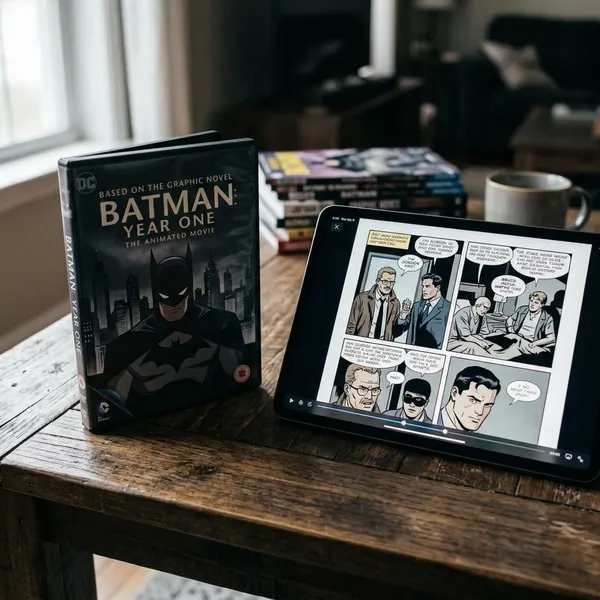
The 2011 Batman: Year One movie gets confused with a motion comic because it is unusually faithful to the comic's story and mood. Short clips can look like comic panels brought to life, especially when they appear next to fan edits or comparison videos in search results.
The practical difference is format. A motion comic usually starts from existing comic art and adds limited movement, narration, music, or voice work. The 2011 release is an official animated film with new animation and a full production behind it.
The film follows the comic closely
The 2011 film keeps the same basic storyline, many of the same character beats, and the important Bruce/Gordon split. If you know the comic, parts of the movie feel very close to the page.
Many scenes preserve Mazzucchelli's visual influence
A lot of the film's confusion comes from how much it respects Mazzucchelli's visual language. The lighting, framing, and grounded Gotham atmosphere often echo the comic rather than trying to reinvent it.
Fan uploads often use the motion comic label
On YouTube and similar platforms, fan uploads often use "motion comic" because it describes the viewing style people are searching for. These videos may use scanned panels, slow zooms, added music, narration, or amateur voice acting.
- Good for: sampling the panel-with-movement style.
- Less ideal for: a reliable first experience of the story.
- Check first: whether the upload clearly names DC, Warner Bros., or an official platform.
A fan edit can be enjoyable, but it should not be mistaken for an authorized release just because the title uses official-sounding wording.
Search results mix official and unofficial versions
Search results make this messier than it should be. A store listing for the animated film, a comic page, a fan video, and an audio adaptation can all appear for the same search phrase.
- Original story: choose the comic.
- Official visual adaptation: choose the 2011 animated film.
- Official listening option: look for the DC audio version.
- Moving comic panels: expect mostly fan-made uploads.
Which Batman Year One version should you choose?
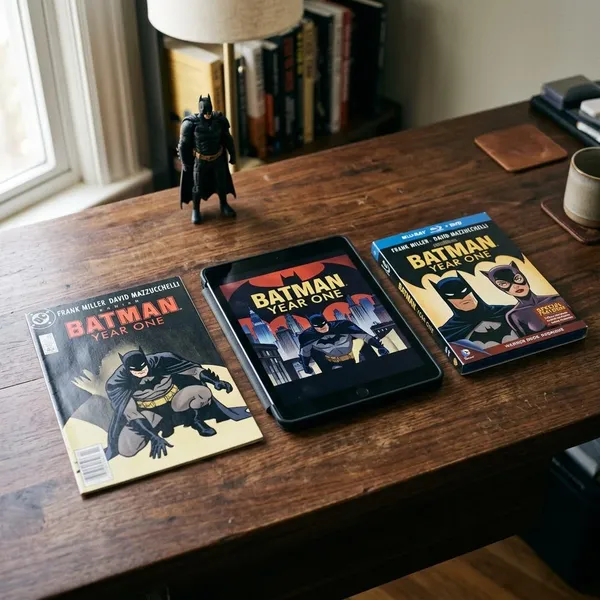
Choose based on the experience you actually want, not on the label attached to a search result. A reader who cares about the original pacing should start with the comic. Someone who wants a legal screen version for one evening will probably be happier with the 2011 film. If you listen during a commute or while doing chores, the audio version makes more sense than forcing a visual format.
| What you want | Best fit | What to watch out for |
|---|---|---|
| The original version | The 1987 comic | Do not replace it with clips if you care about Mazzucchelli's pacing. |
| An official screen adaptation | The 2011 animated film | It is animation, not a motion comic. |
| A hands-free version | Official audio adaptation | You lose the artwork, so it works best as a companion or revisit. |
| Panels with movement | Fan motion comics | Quality and official status vary widely. |
Conclusion
The cleanest way to handle the search confusion is to separate the formats before choosing. Read the comic for the original, watch the 2011 film for the official animated adaptation, use the audio version when convenience matters, and save fan motion comics for the specific moving-panel effect. If official status matters to you, check the publisher before pressing play.