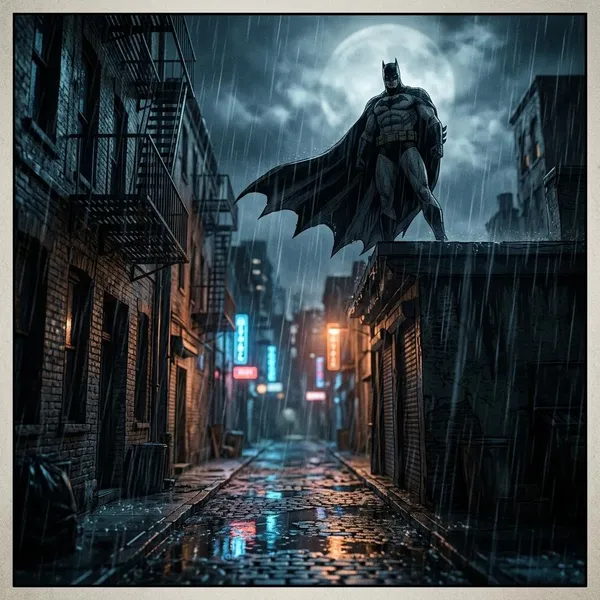
If you searched for motion comics dc, you are probably looking for official DC stories that sit between reading a comic and watching an animated film. The best starting points are usually Watchmen Motion Comic, Superman Red Son, Batman Black and White, Batgirl Year One, and The Batman Adventures Mad Love, especially if you want the original comic art preserved rather than fully remade.
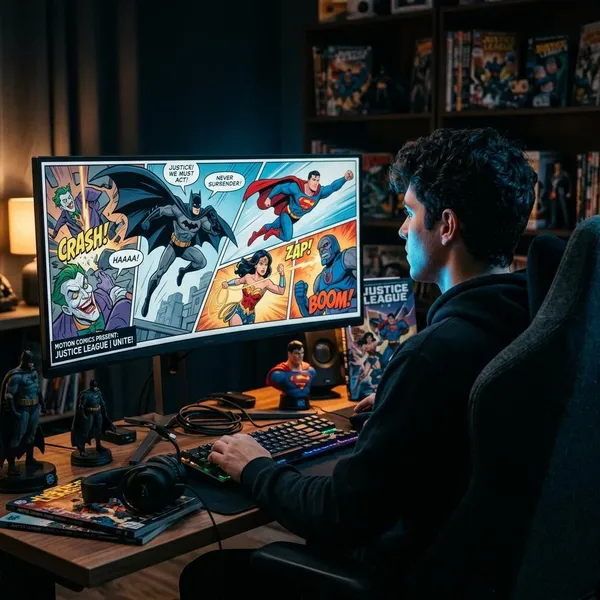
What are DC motion comics?
DC motion comics are comic adaptations that keep the look and structure of the printed page while adding movement, voices, music, and sound effects. They are not meant to replace animated movies. They are closer to a guided version of the comic, with the original panels still doing most of the storytelling.
Comic artwork enhanced with limited animation
The artwork usually comes directly from the comic or is closely based on it. Instead of redrawing every scene for animation, the production may separate a character, background, speech moment, or visual effect so the image can move slightly on screen.
- Good fit: dramatic panels, noir shadows, symbolic imagery, and close-ups.
- Less ideal: stories that depend mainly on fast hand-to-hand action or large moving set pieces.
- What to notice first: whether the motion supports the panel or distracts from the art.
Voice acting, music, and sound effects
Audio is often the difference between a flat slideshow and a motion comic that actually works. Voice acting can make internal monologue, sarcasm, fear, or tension easier to read, while music gives quieter scenes more weight.
The risk is overdoing it. If the voices feel mismatched or the sound design pushes too hard, the comic can start to feel less elegant than the page. The stronger DC motion comics use audio as a guide, not as a replacement for the artwork.
A format between comics and full animation
A motion comic is useful when you want more than silent reading but do not expect a full animated movie. Think of it as a screen-friendly way to move through the original comic: panels still matter, pacing is usually slower, and the experience rewards attention to art and dialogue.
If you are watching with someone who does not read comics often, choose a self-contained story first. If you mainly want fluid fights and big action, a DC animated movie will probably be the better match.
Official DC motion comics
DC has had a smaller motion comic catalog than its animated movie catalog, and availability can change depending on platform, region, and older digital distribution deals. Some titles are easy to recognize because they adapt major graphic novels; others appeared as shorter digital releases or companion-style projects.
Watchmen Motion Comic
Watchmen Motion Comic is one of the clearest examples of why the format exists. The story depends heavily on panel composition, repeated visual details, narration, and atmosphere, so preserving the comic's structure matters more than adding constant movement.
It is a strong first pick if you want a screen version that still feels close to the book. Do not treat it as background viewing, though. Watchmen rewards careful attention, and the motion comic works best when you are willing to watch it almost as closely as you would read it.
Batman Black and White
Batman Black and White suits motion comics because Batman often works through mood, shadow, silence, and short bursts of tension. The black-and-white art gives the format less to "decorate" and more to preserve, which is usually a good thing.
This is also a practical choice if you do not want a long commitment. Anthology-style Batman stories let you sample the format quickly and decide whether the slower, art-led rhythm appeals to you.
Batgirl Year One
Batgirl Year One gives the list a lighter and more character-driven option. Barbara Gordon's early hero story depends on personality, timing, confidence, and frustration as much as action, so voice performance can add something useful.
For newer DC viewers, this kind of origin material is easier to enter than a continuity-heavy crossover. It is the type of motion comic to choose when you want charm and character momentum rather than a darker mythic tone.
The Batman Adventures Mad Love
The Batman Adventures Mad Love is especially interesting because Harley Quinn's appeal depends so much on rhythm, voice, and emotional whiplash. A motion comic can keep the comic artwork while giving the dialogue more performance than the page alone can provide.
It is a good pick for someone who knows Batman from animation but has not read many comics. The story is recognizable, compact, and emotionally sharp without requiring a deep DC timeline.
Superman Red Son
Superman Red Son has been released in motion comic form, and its alternate-history premise makes it easy to understand quickly: Superman lands in the Soviet Union instead of Kansas. That one change creates the whole appeal.
The format fits because the story is driven by ideology, symbols, speeches, and moral pressure. If you are choosing between the motion comic and a fuller animated adaptation, pick the motion comic when you care more about the original comic's visual framing and pick the movie when you want a smoother, more conventional viewing experience.
Jonah Hex
Jonah Hex shows that DC motion comics are not limited to capes and big superhero mythology. Western stories can work well with stillness: a slow pan across a face, a pause before a gunfight, or rough sound design can carry more weight than constant motion.
Dark Nights Death Metal Sonic Metalverse
Dark Nights Death Metal Sonic Metalverse sits closer to DC's modern event and promotional side than to a classic self-contained motion comic release. It is useful as a reference point because it shows how the label can stretch into more stylized digital presentation.
Approach it differently from Watchmen or Superman Red Son. It is more about energy, branding, and event atmosphere than giving you the definitive way to experience a complete comic story.
How DC motion comics differ from animated movies
The main difference is expectation. A DC animated movie is built as a film, with redesigned scenes, continuous motion, and screen-first pacing. A DC motion comic is built from the comic outward, so the original page structure remains much more visible.
That means neither format is automatically better. If you want a relaxed movie night with smooth action, choose an animated film. If you want to experience the original art, dialogue, and pacing with added sound and movement, a motion comic is usually the smarter choice.
Original comic art instead of full animation
Motion comics usually keep the artist's linework, panel framing, facial expressions, and page rhythm. Animated movies often reinterpret those elements so the story can move smoothly for a different medium.
This matters most with visually distinctive books. If the art style is a major reason people remember the comic, a motion comic can feel closer to the source than a fully animated adaptation.
Limited movement instead of continuous action
Movement in a motion comic is selective: a zoom, a blink, drifting smoke, a moving mouth, a sudden sound cue. That restraint can make a detective scene, political argument, or tense reveal feel focused.
It can also disappoint the wrong viewer. If someone expects feature-level action, the format may feel stiff. The safer way to judge it is not "Does this move enough?" but "Does the movement help the original panel land better?"
Closer use of the original comic structure
Motion comics often follow the comic's scene order, panel logic, and dialogue more closely than animated films do. That makes them useful if you want a bridge into the source material before reading the book itself.
For dense stories, this closer structure can be a real advantage. You get performance and sound without losing as much of the comic's original pacing, though you should still expect some adaptation choices depending on the release.
Conclusion
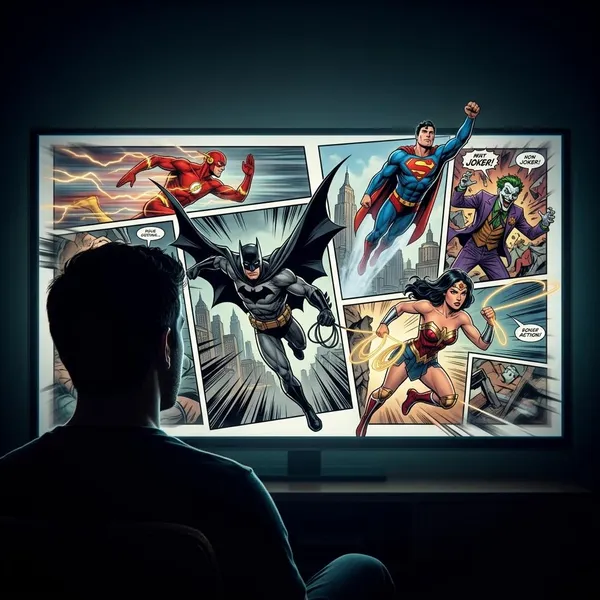
DC motion comics are worth trying when you care about the original comic art but want a more guided, screen-based experience. Start with a self-contained title or a character you already like, and do not judge the format by animated movie standards; its strength is the way it keeps the page visible while adding just enough voice, sound, and movement to change how the story feels.