Berserk The Motion Comic is a Studio Taka fan adaptation that turns Berserk manga panels into a voiced, edited motion comic. The two checks that matter most are simple: it is not an official licensed anime, and it only covers part of the manga, starting with the Black Swordsman material.
What is Berserk The Motion Comic?
Berserk The Motion Comic is a fan-made video adaptation of Kentaro Miura's manga by Studio Taka. It uses manga artwork as the base, then adds editing, camera movement, sound effects, music, and voice acting so the scenes feel closer to a cinematic presentation.
A fan-made Studio Taka adaptation
Studio Taka created the project as a fan adaptation, not as a commercial Berserk release. That fan-made status explains both its appeal and its limits: the work is clearly made for people who care about the manga, but it does not have the schedule, licensing, or production backing of an official anime.
If you are checking it for watch-order purposes, treat it as optional. It can be a strong companion for early Berserk material, but it should not be counted as part of the official anime lineup.
Manga panels with motion and voice acting
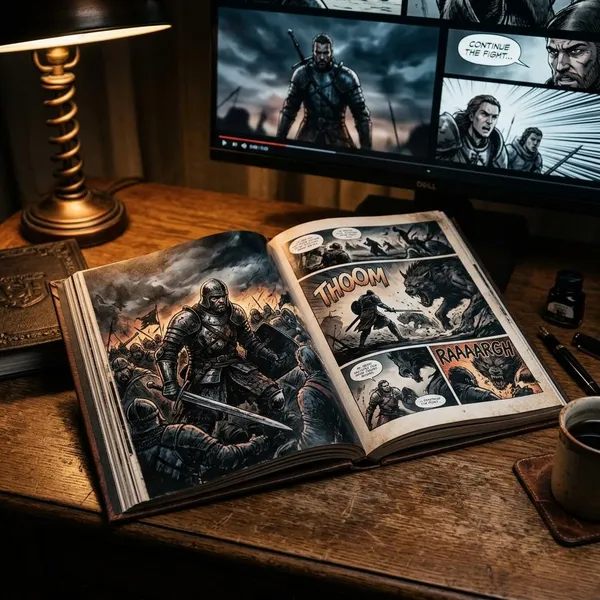
The format is built around existing manga panels rather than full frame-by-frame animation. Panels may be moved, layered, zoomed, cut, and timed with voice performances and sound design.
- Best fit: viewers who want the manga's look but prefer voices and audio atmosphere.
- Less ideal: readers who want to control the pacing and sit with Miura's artwork without added direction.
- Common mistake: expecting it to move like a TV anime; it is closer to an enhanced manga presentation.
Is Berserk The Motion Comic official?
No. Berserk The Motion Comic is not an official licensed Berserk anime. That distinction matters because the project is polished enough that a new viewer might assume it belongs beside the official anime adaptations.
It was created as a fan project
The project exists because fans wanted a version that stayed visually close to the manga while adding sound and performance. That makes it feel more like a community tribute than a standard studio product.
This is also why release gaps can be long. A fan project depends on available time, contributors, and resources, so it should not be judged by the same expectations as a seasonal anime.
It was not a licensed Berserk anime
For an official-only watch list, skip it. It was not produced as a licensed TV series, film, or authorized streaming anime connected to the rights holders.
That does not mean it has no value. It simply means its value is different: it is useful for seeing how Berserk's manga panels can work with voice acting and sound, not for tracking the franchise's official release history.
It adapts material from the original manga
Although it is unofficial, the story material comes from the original Berserk manga. It does not function as a separate side story or alternate continuity.
- Canon source: the manga.
- Adaptation type: fan motion comic using manga material.
- Best use: a companion viewing experience after, before, or alongside reading the early chapters.
What part of Berserk does the motion comic cover?
Berserk The Motion Comic begins with the Black Swordsman arc, which is the opening storyline of the manga. It does not cover the full Berserk story, so a new viewer should not treat it as a complete path through the series.
This matters most if you are choosing where to start. If you want the fullest and most reliable version, start with the manga. If you want a voiced sample of Berserk's opening tone before committing to a long read, the motion comic can work well.
It begins with the Black Swordsman arc
The Black Swordsman arc introduces Guts as a hardened, feared, and damaged figure already moving through a brutal dark fantasy world. Starting here gives the motion comic a sharp first impression: violent, mysterious, and heavy with atmosphere.
For viewers coming from later anime discussions, this can feel different from a chronology-based recommendation. The motion comic follows the manga's opening route, not a rearranged "start here for timeline order" approach.
It follows Guts from the manga's opening story
The early focus is on Guts as readers first meet him: already shaped by events the audience does not fully understand. That limited context is part of the hook, because the story raises questions before it explains the deeper history behind him.
It covers only part of the wider Berserk story
The motion comic covers only a small part of Berserk compared with the manga's full scope. A practical expectation is to watch it for the Black Swordsman material and then move to the manga if you want the larger story, character development, and later arcs.
Most viewers refer to three released episodes: Episode 1, The Black Swordsman (Part 1), followed by Episode 2 and Episode 3. Because fan projects can change slowly, it is worth checking Studio Taka's own channel or current pages if you need the latest release status.
Berserk Motion Comic vs manga and anime
The main difference is the amount of control each format gives you. The manga gives you the original pages and your own pacing. The motion comic adds voices, timing, music, and movement while keeping the manga art central. The anime rebuilds scenes as full animation for screen viewing.
| Format | What you get | Best choice if you want |
|---|---|---|
| Manga | The original artwork, pacing, and full story path | The most complete Berserk experience |
| Motion comic | Manga panels with voice acting, sound, and edited movement | A more cinematic way to experience early manga material |
| Anime | Full animation and conventional screen adaptation | A show-like viewing experience instead of page-based storytelling |
Conclusion
Berserk The Motion Comic is worth understanding as a fan-made bridge between manga and anime: close to the manga visually, stronger than plain reading for sound and performance, but unofficial and limited in coverage. If you want the full Berserk experience, the manga should still come first; if you want a voiced, atmospheric version of the opening material, Studio Taka's motion comic is a useful companion rather than a replacement.