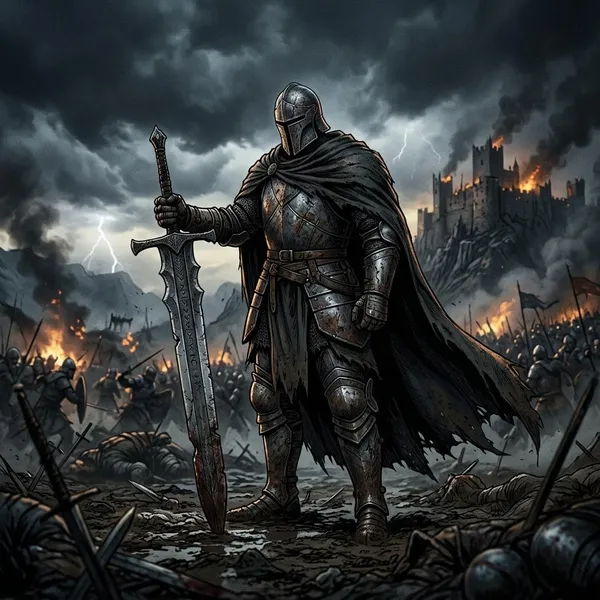
The bringer of ruin motion comic is most useful if you want the short version of how Atakhan, Sahn-Uzal, LeBlanc, and early Noxian darkness fit together. The key thing to know first: it is not just a monster story, but a lore piece about ambition being turned into something permanent, violent, and politically useful.
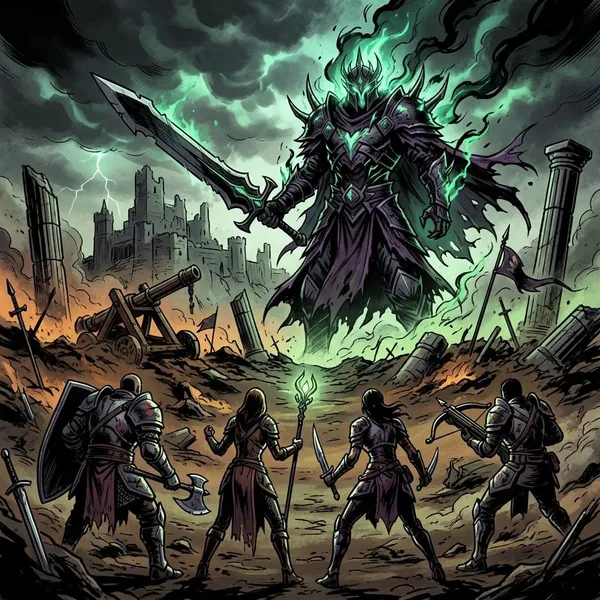
Bringer of Ruin story summary
The story begins with Sahn-Uzal as a brutal ruler who is already powerful but not satisfied. His goal is not simply to win another battle; he wants a kind of control that outlives normal human limits. That makes the comic especially important for anyone trying to understand why his later identity as Mordekaiser feels so inevitable.
Sahn-Uzal seeks greater power
Sahn-Uzal is not shown as a ruler who accidentally goes too far. He already sees domination as the answer to every problem, and his hunger for more power is deliberate. If you are mainly a Mordekaiser fan, this is the part to watch closely because it shows the mortal mindset before the undead legend takes over.
Atakhan is bound through a dark ritual
The ritual is the real turning point. Atakhan is not just introduced as a dangerous creature; he is shaped into a weapon through coercive, corrupt magic. That matters because the horror of the scene is not only the result, but the willingness to use suffering and ritual power as tools of rule.
- For new lore readers: treat the ritual as the moment the story stops being ordinary conquest.
- For Noxus lore fans: notice how power, sacrifice, and domination are already tangled together before the modern empire exists.
- For Mordekaiser fans: the ritual reflects the same refusal to accept natural limits that defines him later.
The Bringer of Ruin is unleashed
Once Atakhan is unleashed, Sahn-Uzal's ambition becomes visible. The danger is no longer political or theoretical; it has a body, a name, and a purpose. That is why the title works: the Bringer of Ruin is the consequence of a ruler turning forbidden power into a living catastrophe.
This is also where the story becomes bigger than one man's desire. A private hunger for control becomes a historical scar, which is the kind of event that can echo through Noxian memory and later League lore.
LeBlanc enters the story later
LeBlanc's later appearance changes the way the whole comic reads. Without her, the story could feel like a closed ancient tragedy. With her involved, it starts to look like one piece in a longer pattern of secrecy, preservation, and manipulation around Noxus.
If you are watching mainly for action, her role may feel quieter than Atakhan's. If you follow the Black Rose, it is one of the most important signals in the comic, because LeBlanc rarely appears in lore without implying that someone is using history for a future purpose.
Main characters in Bringer of Ruin
The comic works because its main characters represent different kinds of power. Sahn-Uzal is open domination, Atakhan is ruin made physical, and LeBlanc is hidden control. Keeping those roles separate makes the story much easier to understand.
Atakhan the Bringer of Ruin
Atakhan is the destructive figure created through the ritual, but his value in the story is not only that he is frightening. He gives Sahn-Uzal's ambition a visible cost. Instead of being told that ancient power was cruel, you see what that cruelty produces.
For a casual viewer, Atakhan is the monster at the center of the spectacle. For a lore-focused viewer, he is more useful as proof of how far early rulers were willing to go when conquest alone was not enough.
Sahn-Uzal before Mordekaiser
Sahn-Uzal is the same person who later becomes Mordekaiser, and the comic is strongest when it shows that his transformation is not a clean break from his old self. The mortal version already has the arrogance, cruelty, and need for absolute control that define the undead warlord later.
That makes the story worth watching before diving deeper into Mordekaiser lore. It gives his later obsession with empire and death a clearer starting point, rather than making it feel like undeath alone created his personality.
LeBlanc and the Black Rose
LeBlanc brings the Black Rose into the story, which adds a quieter but sharper threat. Sahn-Uzal conquers openly; LeBlanc survives through knowledge, disguise, and long-term influence.
The practical way to read her role is this: she tells you the event still matters. When the Black Rose touches an ancient disaster, it usually means the past has not stayed buried. It may be remembered, studied, hidden, or used.
How Bringer of Ruin connects to Noxus lore
The comic connects to Noxus by showing the region's darker roots before the familiar modern empire. It deals with conquest, strength, sacrifice, secret influence, and the belief that power is worth almost any cost. Those themes are central to Noxus, but the comic presents them in a rougher and more mythic form.
If you are new to League lore, watch it as a compact Noxus origin-flavored story. If you already know Mordekaiser and LeBlanc, watch for the details that connect ancient brutality to later factions and champions.
It explores Noxus before the modern empire
This is not the polished image of Noxus as a structured empire with recognizable military and political systems. The story reaches into an older world where rule is harsher, more personal, and more openly tied to fear.
That setting matters because it shows that Noxian ideas about strength did not appear from nowhere. In this older context, strength is not an inspiring slogan; it is a survival rule, a weapon, and often an excuse for cruelty.
It expands Atakhan's place in Noxian history
Atakhan gains importance because the comic gives him a place in the region's memory. He is not just a random destructive being. He becomes part of a larger pattern where ancient Noxian power is built through violence, ritual, and terrible bargains.
- What to remember: Atakhan is the consequence, not the mastermind.
- What not to miss: his origin says as much about Sahn-Uzal's world as it does about Atakhan himself.
- Why it matters: Noxus feels older and darker when its history includes figures like him.
It adds to the Black Rose storyline
The Black Rose connection gives the comic its long tail. LeBlanc's presence suggests that ancient events can still feed into modern schemes, especially when forbidden knowledge or powerful secrets are involved.
This is the part that makes the story more than a flashback. If Sahn-Uzal and Atakhan show the visible horror of old Noxus, LeBlanc shows the hidden machinery that can keep such horrors relevant long after the battlefield is gone.
Conclusion
Bringer of Ruin is worth watching if you want a clearer link between Sahn-Uzal's mortal ambition, Atakhan's creation, and the Black Rose's deeper involvement in Noxian history. It works best when you treat it less like a standalone monster scene and more like a dark lore bridge between ancient conquest and the forces still shaping Runeterra.