The dead space animated comic is the quickest way to see what happened on Aegis VII before Isaac Clarke arrives in the first game. It is a six-part motion comic that works best if you want the colony's collapse, the Marker's influence, and the start of the outbreak in story order without digging through every game log.
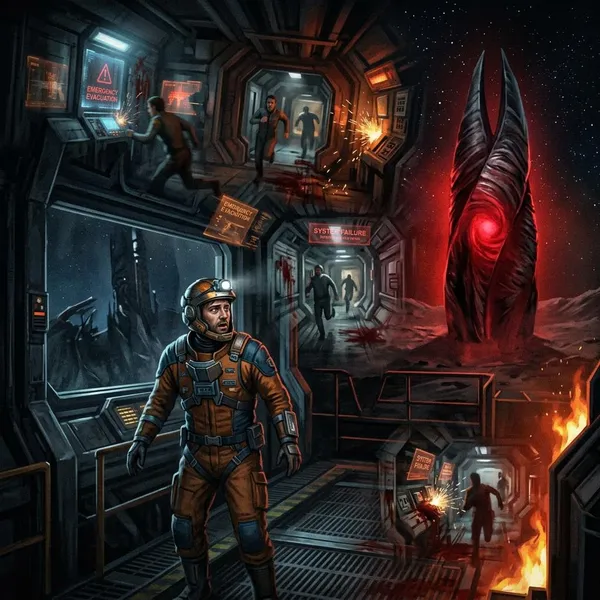
Dead Space animated comic story
The story follows the fall of the Aegis VII colony over several weeks. Its value is not just that it shows monsters earlier in the timeline, but that it shows how the disaster becomes possible: discovery first, then obsession, then violence, then the outbreak.
The colony discovers the Marker
The crisis begins when miners uncover the Red Marker beneath Aegis VII. At first, the discovery looks important rather than dangerous. Unitologists see it through faith, company interests see value in it, and most ordinary colonists do not yet understand that the object is already changing the rules around them.
That early optimism is the first trap. If you are watching mainly for lore, this is the part to pay attention to: the Marker is not treated as a random horror prop. It becomes the center of belief, ambition, secrecy, and fear before the physical outbreak takes over.
The Marker begins affecting the colonists
The Marker's influence starts with the mind. Colonists suffer hallucinations, emotional swings, paranoia, fixation, and violent impulses. The danger is hard to stop because it does not look the same in every person.
- For some people, it appears as religious obsession or certainty.
- For others, it looks like stress, grief, panic, or mental breakdown.
- For security and leadership, that makes the crisis easy to misread until it is too late.
Violence spreads across Aegis VII
Before the Necromorphs become the main visible threat, the colony is already tearing itself apart. Assaults, murders, suicides, panic, and distrust spread through the settlement. The horror here is still mostly human, which makes it feel worse rather than smaller.
This stage also explains why the colony cannot simply organize a clean response. Once people no longer trust their own senses, their neighbors, or their leaders, even basic emergency actions become fragile. A normal riot can be contained; a colony-wide psychological collapse cannot be handled with standard procedure for long.
The Necromorph outbreak begins
The outbreak begins after the colony has already been weakened by fear and death. That timing matters because dead bodies are no longer only casualties; they become part of the next phase of the disaster. The comic makes the outbreak feel like the result of a chain reaction rather than a sudden monster attack.
Abraham Neumann fights to survive
Abraham Neumann, a P-SEC sergeant, gives the story its clearest human viewpoint. He is not a super-soldier or a lore expert; he is a security officer trying to respond to a crisis that keeps changing shape. That makes him a good anchor for viewers who want the timeline to feel understandable, not just chaotic.
Where the Dead Space animated comic fits in the timeline
The motion comic belongs before the original Dead Space game. It is not a side story that can be placed anywhere; it shows the collapse that creates the situation the Ishimura eventually enters.
For a first-time player, the best choice depends on how you like horror. Watch it before the game if you prefer clear background and timeline context. Save it for after the game if you want the Ishimura to feel more mysterious and then fill in the missing Aegis VII story later.
It begins weeks before the first game
The animated comic starts weeks before Isaac Clarke's story. That lead time is important because the disaster does not happen in one clean break. The colony moves from discovery to instability to violence to outbreak in stages.
This slower build makes Aegis VII feel less like a plot device. People hesitate, explain things away, and treat early incidents as separate emergencies. That is exactly why the Marker's influence becomes so dangerous: by the time the pattern is obvious, the colony has already lost too much control.
It follows the fall of the Aegis VII colony
The comic keeps Aegis VII at the center instead of using it only as background lore. You see a working colony become a place where normal routines, authority, and trust collapse. That makes the later ruins and references in the game feel more personal.
It leads into the Ishimura disaster
The events on Aegis VII lead directly into the Ishimura's involvement. By the time the ship enters the picture, the colony is already unstable, communications are compromised, and the Marker has pushed the crisis far beyond a simple rescue or repair mission.
Main characters in the Dead Space animated comic
The cast is small enough to keep the six-part story moving, but each main character shows a different part of the colony's failure. Neumann gives the security perspective, while the supporting cast helps show leadership pressure, scientific interpretation, faith, fear, and ordinary civilian life.
Abraham Neumann
Abraham Neumann is the main character and the easiest person to follow through the chaos. As a P-SEC sergeant, he starts from practical instincts: investigate, contain, protect, and survive. The problem is that Aegis VII stops behaving like a crisis that practical training can fully manage.
He is especially useful for viewers who are new to the lore. Instead of dropping you straight into abstract Marker mythology, the story lets you understand the collapse through someone trying to make sense of each new failure as it happens.
Marla Janssen
Marla Janssen helps represent the colony's authority structure and the pressure on people who are supposed to make decisions during the emergency. Her role matters because Aegis VII does not fall only from monsters or madness; it also falls because institutions cannot respond quickly or honestly enough to what is happening.
Natalia Deshyanov
Natalia Deshyanov brings in the scientific and analytical side of the crisis. She reflects the attempt to observe and understand what the Marker is doing, even as the situation becomes less explainable by normal categories.
That makes her role different from Neumann's. He is dealing with immediate survival and order; she points toward the deeper problem that knowledge alone may not be enough when the phenomenon is already changing people faster than anyone can contain it.
Tom Sciarello
Tom Sciarello gives the colony a more ordinary human texture. Characters like him matter in a prequel because they remind you that Aegis VII was not just a doomed location on a timeline. It was a place with workers, routines, relationships, and everyday concerns before the Marker turned it into a horror story.
How the Dead Space animated comic connects to the game
The animated comic connects to the game by filling in the part the game mostly leaves behind: the fall of Aegis VII before Isaac arrives. It gives the first game a stronger foundation without replacing the game's own mystery and tension.
It explains what happened on Aegis VII
The comic turns Aegis VII from background information into a sequence of events. You see the Marker discovered, the colony destabilized, violence spread, and the outbreak begin. That makes the game's opening situation easier to place.
It shows the Marker's early effects
The Marker's early effects are one of the main reasons to watch the motion comic. It shows how belief, perception, emotion, and behavior are affected before the horror becomes mainly physical.
- Watch before playing if you want the Marker's role to be clearer from the start.
- Watch after playing if you want to preserve more uncertainty during the game.
It gives context for the Necromorph outbreak
The Necromorph outbreak makes more sense when you see the colony's earlier collapse. The comic connects the outbreak to death, panic, failed containment, and the Marker's influence. It is not just "monsters appear"; it is a disaster system feeding itself.
It sets up events before Isaac arrives
By the time Isaac arrives, the most important damage has already been done. The colony has fallen, the Marker's influence has spread, and the Ishimura is entering a situation that is much worse than a normal emergency call.
That setup is useful whether you are new to Dead Space or revisiting it. New players get a clearer timeline; returning fans get a sharper sense of how much tragedy happened before the game even begins.

Conclusion
The animated comic is not required homework, but it is one of the better prequel pieces if you want the original Dead Space timeline to click into place. Watch it before the game for clearer context, or after the game if you prefer mystery first; either way, its real strength is showing that the Ishimura disaster began with a colony that had already been broken by the Marker.