If you searched for gay animated comics, the first thing to sort out is format: do you want a comic that moves, a queer webcomic to read, or a comic that has been adapted into animation? Motion comics usually keep the drawn-panel feel and add movement, sound, and timing, while full animated adaptations rebuild the story for screen. Once that difference is clear, it becomes much easier to choose what to watch first and what is better saved for reading.

What are gay animated comics?
Gay animated comics are usually comic-style stories with gay or broader LGBTQ themes that include some level of movement. The term is used loosely, so it can point to motion comics, animated shorts based on comic art, or queer comics that later became animated shows or films.
| What you want | Best format to look for | What to expect |
|---|---|---|
| A comic that feels alive but still looks drawn | Motion comic | Panels, limited movement, sound, voice, or music |
| A story to read at your own pace | Webcomic or print comic | Static pages, scroll format, or collected volumes |
| A more complete screen experience | Animated adaptation | Episodes or a film with fuller movement and voice acting |
Motion comics add animation to comic style artwork
A motion comic adds movement to existing or comic-inspired artwork. You might see slow camera pans, blinking characters, timed speech bubbles, voice acting, music, or effects layered over illustrations. It is not usually as fluid as a traditional animated series, but that is part of the appeal.
Gay webcomics are digital comics without full animation
Gay webcomics are meant to be read online, often as pages, episodes, or vertical scrolls. They may look vivid and cinematic, but unless movement and timed playback are part of the experience, they are not animated comics.
- Choose a webcomic if you want slower pacing and more time with the artwork.
- Choose a motion comic if you want the same comic feel with sound and movement.
- Choose an adaptation if you prefer voice performance, scene timing, and a finished screen version.
Gay and LGBTQ animated comics to watch
The most useful way to approach LGBTQ animated comics is by mood and format, not just by whether a title has queer characters. Some are indie and experimental, some lean into music or gothic style, and some are better understood as webcomic-to-animation projects.
Between Us & Our Enemies
Between Us & Our Enemies is a useful title to explore if you are interested in indie queer animation that feels close to illustrated storytelling. Its appeal is less about mainstream polish and more about atmosphere, stylized visuals, and the sense that scenes are being shaped like moving comic panels.
It is a better fit for viewers who enjoy mood, conflict, and independent queer media than for someone expecting a conventional animated sitcom or a long-running romance series.
Masque of the Red Death A Musical Thriller
Masque of the Red Death A Musical Thriller sits in a more theatrical corner of queer comic-inspired animation. The musical element matters because songs control pacing and emotion in a way that a static comic cannot.
Try it if you like gothic style, dramatic visuals, or camp-adjacent horror. Skip it as a first pick if what you really want is a simple gay romance motion comic; the tone is more stylized and performance-driven.
The Bedfellows
The Bedfellows is especially helpful for understanding how a queer webcomic property can move into animation. The humor and character dynamic can work differently depending on whether you read it or watch it, because timing becomes much more controlled in video form.
- Read first if you care about the original comic rhythm.
- Watch first if jokes and voice delivery matter more to you.
- Compare both if you are curious about how webcomic humor changes on screen.
Queer comics adapted into animation
Some queer comics become more widely known only after an animated adaptation reaches a larger audience. That does not make the animated version automatically better; it simply changes the entry point. A reader may prefer the original art and pacing, while a viewer may connect faster through voice acting, music, and movement.
DeadEndia and Dead End Paranormal Park
DeadEndia began as a comic by Hamish Steele and later became the animated series Dead End: Paranormal Park. It is one of the clearer examples of a queer comic world finding a broader audience through animation.
Start with the animated series if you want supernatural comedy, faster pacing, and an accessible introduction to the characters. Go back to the comic if you want to see the source material's original tone and visual identity more directly.
Nimona
Nimona, created by ND Stevenson, is not simply a "gay animated comic" in the narrowest sense, but it belongs in the queer comics-to-animation conversation. Its themes of identity, rejection, transformation, and being seen differently have strong LGBTQ resonance.
The animated film is the easier entry point for many viewers because it has scale, action, and emotional immediacy. The comic is still worth reading if you want the original shape of the story and the rougher, more intimate feel that comes from the page.
The Bedfellows webcomic and animated series
The Bedfellows also fits here because it shows a smaller, creator-driven path from webcomic culture into animation. That path is important: not every queer comic adaptation begins with a studio deal or a major streaming platform.
For viewers, the practical choice is simple. If the characters and humor are the draw, sample the animated version. If you want more context and a better feel for the creator's original pacing, spend time with the webcomic too.
Popular gay and queer comics if you prefer reading
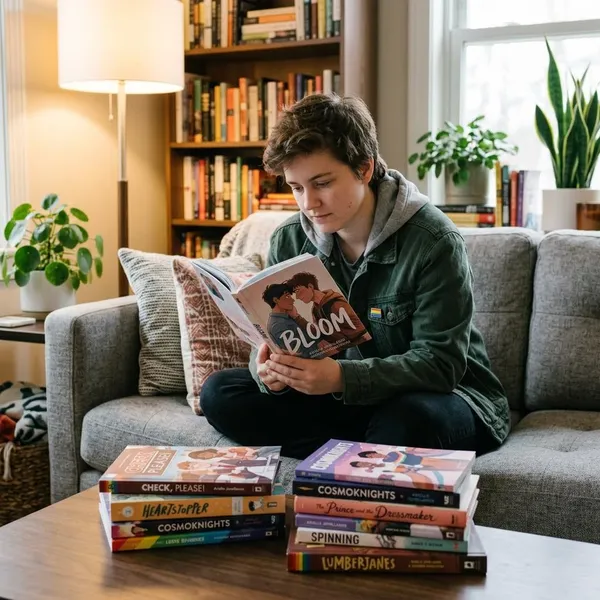
Reading may be the better route if you want deeper character arcs, quieter romance, or more control over pacing. A short motion comic can give you mood quickly, but a comic series often gives relationships and worldbuilding more room.
Heartstopper
Heartstopper by Alice Oseman is a gentle, accessible starting point for readers who want queer romance with emotional warmth. The comic format matters because pauses, expressions, and small visual details carry much of the feeling.
It is a good choice for someone who wants character intimacy more than spectacle. If you are coming from screen adaptations, the comic can feel quieter, but that quietness is one of its strengths.
The Backstagers
The Backstagers blends theater, fantasy, friendship, and queer representation. It is a better pick for readers who want found family and adventure rather than a story focused only on dating.
The stage-crew setting gives the comic a strong sense of community. That makes it useful for readers who want queer characters in a lively ensemble where identity is present but not the only engine of the plot.
Kevin Keller
Kevin Keller is important because he brought an openly gay character into the long-running world of Archie Comics. For readers who care about mainstream comic history, that visibility matters.
The best reason to read Kevin Keller is context. The stories are accessible, but their bigger value is seeing how a classic comic setting made room for an openly gay character in everyday teen-comic situations.
Kyle's Bed and Breakfast
Kyle's Bed and Breakfast by Greg Fox offers a different kind of queer comic experience: adult, social, and rooted in an ongoing community. The guesthouse setup allows new relationships and conflicts to enter without losing the familiar center of the series.
Choose this if you want slice-of-life gay storytelling that is not mainly about first love or school-age coming out. It fits a reader who wants community dynamics, recurring characters, and a more grown-up social setting.
Gay Comix
Gay Comix is worth knowing for its historical place in LGBTQ comics. As an anthology, it brought together different creators, tones, and perspectives at a time when queer stories had far less room in mainstream publishing.
It may not be the smoothest first read if you only want contemporary romance, but it is one of the better choices if you want to understand where later gay and queer comics came from.
Conclusion
The easiest way to choose is to match the format to your mood: motion comics if you want drawn art with movement, animated adaptations if you want a fuller screen experience, and webcomics or print comics if you want control over pacing. For a quick exploration, try one indie motion-style project, one adaptation such as Dead End: Paranormal Park or Nimona, and one comic-only title; that mix will tell you faster than any definition which corner of queer visual storytelling suits you best.