The Halo Headhunters motion comic is a short canon adaptation of "Headhunters," a story from Halo: Evolutions. It follows Jonah-B283 and Roland-B210, two Spartan-III Headhunters, on a covert sabotage mission that turns into a trap set by the Silent Shadow. If you mainly know Halo from the games, this is one of the quicker side stories to watch when you want to understand how dark ONI's Spartan-III operations could get.
Who are Jonah-B283 and Roland-B210?
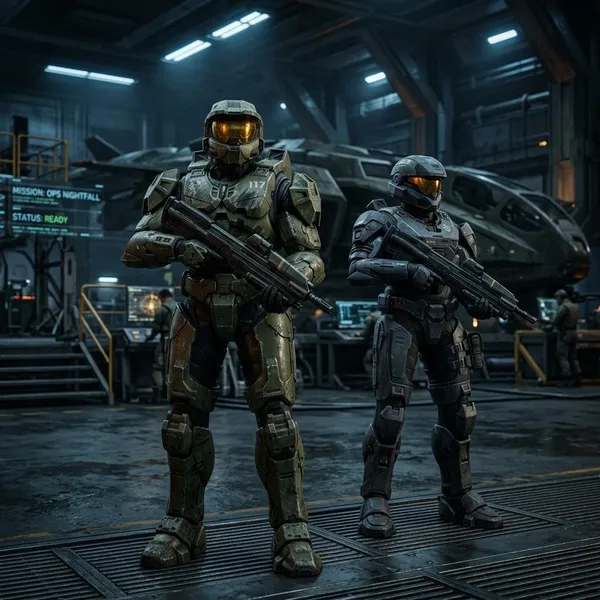
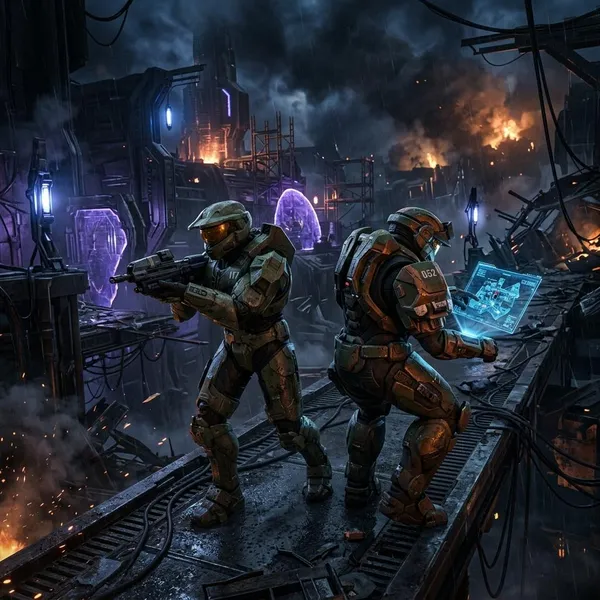
Jonah-B283 and Roland-B210 are Spartan-IIIs assigned as a two-man Headhunter team. Their job is not to win public battles or hold territory. They are sent behind enemy lines for quiet sabotage, assassinations, and missions where extraction is not guaranteed.
Jonah-B283 as the aggressive Spartan III
Jonah is the harsher half of the pair. He is angry, confrontational, and willing to push violence further than Roland, but he is not simply reckless. His aggression has a purpose: unsettle the enemy, force mistakes, and keep moving when the mission becomes ugly.
That makes him feel different from the cleaner heroic Spartan image many fans know from the main games. Jonah reads like someone who has accepted that his role may end in death, so his real concern is whether the mission still hurts the Covenant enough to matter.
Roland-B210 as the tactical partner
Roland is the stabilizer. He is calmer, more methodical, and more focused on timing, explosives, and mission discipline. When Jonah brings pressure, Roland keeps the operation pointed at its objective.
Their role as a two man Headhunter team
The two-man setup is not just a character detail. It explains how Headhunters operate: small enough to stay hidden, skilled enough to damage major Covenant assets, and dependent on trust because there is usually no larger unit coming to save them.
- Jonah applies force. He handles intimidation and direct violence when stealth breaks down.
- Roland protects the plan. He keeps the sabotage work and timing from falling apart.
- The pair shows the cost of secrecy. Their mission can succeed even if nobody outside ONI ever hears their names.
What happens in Halo Headhunters?
The plot begins as a covert strike against a Covenant outpost network. Jonah and Roland infiltrate the area, plant explosives, and work to weaken the enemy position before a larger UNSC action can take place.
Jonah and Roland infiltrate a Covenant outpost
The opening stretch shows why Headhunters are dangerous. Jonah and Roland observe movement, choose targets, and avoid treating the outpost like a normal battlefield. The practical point is simple: two Spartans can sometimes do more damage by staying unseen than a larger force could do by announcing itself.
This is also where the motion comic sets its best mood. If you are watching for big set-piece action, the early section may feel restrained. If you are watching for black-ops Halo, that quiet pressure is the appeal.
The mission becomes a Silent Shadow ambush
The Silent Shadow shift the story from sabotage to survival. They are not ordinary Covenant guards with better armor; they are elite Sangheili killers using stealth, ambush, and status within Covenant warrior culture to counter the Spartans directly.
That mirror is what makes the fight interesting. The UNSC sends secret Spartans to strike from the dark, and the Covenant answers with its own hunters from the dark. Neither side gets to claim clean moral ground in this part of the war.
Roland is killed during the attack
Roland's death is sudden and deliberately harsh. It removes the tactical half of the team and tells the viewer that the Silent Shadow are not there to be beaten like a normal enemy squad. Once Roland is gone, the mission loses its controlled rhythm, and Jonah is left with only the planted explosives and his refusal to give the Covenant a symbolic victory.
Jonah makes a final sacrifice
Jonah's final act is not a rescue, and it is not a clean heroic win. Wounded and captured, he uses the work Roland already completed and triggers the explosives, destroying the camp and killing himself along with much of the Silent Shadow force.
That ending is why the story sticks. For someone sampling Halo side media, it shows the franchise at its bleakest: the objective can be completed, the enemy can be hurt, and the human cost can still be devastating.
Why Headhunters matters to Halo lore
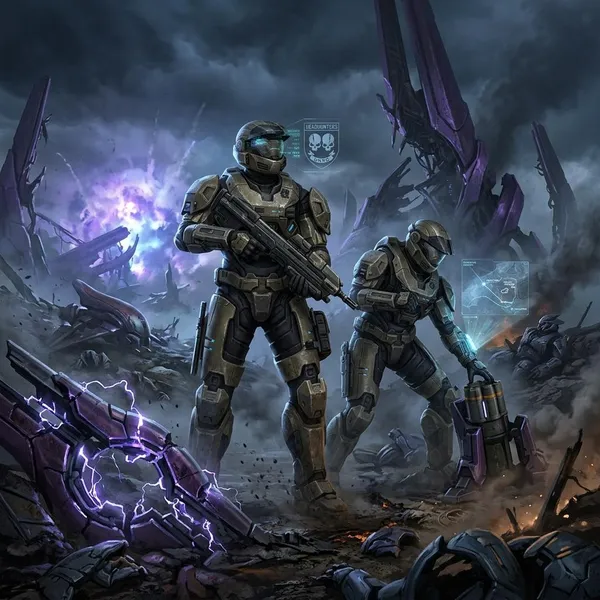
Headhunters matters because it makes a hidden part of the Human-Covenant War feel concrete. Halo often focuses on major battles, fleets, and famous Spartans. This story looks at the smaller classified missions where victory means damage done, not survival earned.
The story explores secret Spartan III operations
The story makes Spartan-III operations feel more varied than "expendable supersoldiers." Jonah and Roland are still disposable in the cold ONI sense, but they are also highly specialized. Their value comes from stealth, compatibility, and the ability to complete a mission with almost no support.
Silent Shadow emerge as elite Spartan hunters
The Silent Shadow become memorable here because they are treated as a real answer to Headhunter tactics. They use patience, concealment, and prestige-backed violence rather than simple numbers.
- For the Covenant side, they show that Sangheili warfare includes specialist traditions, not just frontline honor duels.
- For the UNSC side, they prove that even secret Spartan teams can be studied, anticipated, and trapped.
Jega 'Rdomnai connects the story to later Halo lore
Jega 'Rdomnai is the bridge that makes this short story feel larger than its runtime. He survives Jonah's explosion and later becomes more widely known through Halo Infinite. If you played Infinite first, watching or reading Headhunters gives extra weight to Jega's history without requiring you to dig through a full novel series.
Who made the Halo Headhunters motion comic?
The motion comic works because it does not try to turn the story into a huge animated spectacle. It keeps the narrow, grim shape of the original short story and uses voice, pacing, limited animation, and sound to make the mission feel tense.
Jonathan Goff wrote the original story
Jonathan Goff wrote "Headhunters" for Halo: Evolutions - Essential Tales of the Halo Universe. The short story established the characters, mission, Silent Shadow ambush, and bleak ending that the motion comic adapts.
The prose version is still the better choice if you care about texture more than speed. It has more room for tension and character detail, while the motion comic is easier to fit into a quick lore catch-up session.
MoreFrames created the motion comic adaptation
MoreFrames handled the visual adaptation. That matters because motion comics can easily feel too static, but Headhunters suits the format better than many action-heavy stories would. The limited movement works with the stealth, isolation, and sudden violence rather than fighting against them.
Pyramind Studios handled the sound production
Pyramind Studios handled the sound production, which does a lot of the heavy lifting. In a motion comic, audio has to sell danger that full animation cannot always show.
- Weapons and impact sounds give the fights weight.
- Environmental audio makes the outpost feel less empty.
- Voice performance helps separate Jonah's anger from Roland's control.
Conclusion
Headhunters is worth watching if you want a compact Halo story that actually adds to the wider universe instead of only filling time between games. The motion comic gives you the essential tragedy quickly, while the original Halo: Evolutions story is the stronger follow-up if Jonah, Roland, the Silent Shadow, or Jega's background catches your attention.