If you are searching for the hellboy motion comic, the key thing to know is that Hellboy: The Fury is not a full animated movie. It is a motion-comic adaptation of a major Dark Horse storyline, using the original comic art with added movement, sound, and voice work. For a casual viewer, the format is the first thing to understand; for a continuity-focused Hellboy fan, the bigger point is that The Fury is a pivotal chapter, not a side story.
What comic is Hellboy The Fury based on?
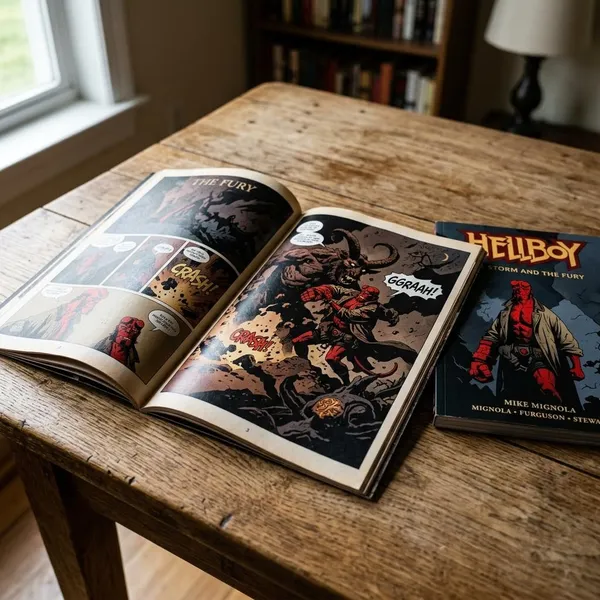
Hellboy: The Fury is based on the Dark Horse comic miniseries of the same name. It belongs to the main Hellboy storyline and follows events that had already been building through The Wild Hunt and The Storm.
The Fury was originally a three issue comic series
The Fury was originally published as a three-issue miniseries. That short length can be misleading, because the story works more like the final act of a much larger arc than a small standalone adventure.
For someone deciding whether to read it, the issue count should not be the deciding factor. Three issues are enough here because the groundwork has already been laid elsewhere; The Fury is where the pressure finally breaks.
Mike Mignola wrote the story
Mike Mignola wrote The Fury, which gives it direct weight inside Hellboy's larger mythology. His usual themes are all there: destiny, refusal, old folklore, and the constant pressure on Hellboy to become something he does not want to be.
Duncan Fegredo drew the interior art
Duncan Fegredo drew the interior art, and that matters more in a motion comic than it might in a regular adaptation. Since the production relies on existing pages rather than replacing them with full animation, the strength of the original layouts does a lot of the work.
Fegredo's art gives the battles, creatures, and mythic atmosphere enough scale that even modest camera movement can feel dramatic. If you are used to fully animated action, the movement may look restrained; if you treat it as enhanced comic art, the visual approach makes more sense.
What happens in Hellboy The Fury?
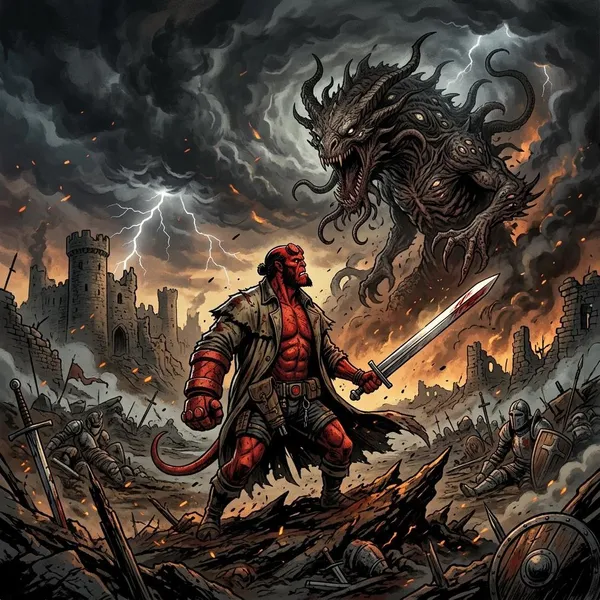
The Fury brings Hellboy into direct conflict with Nimue, the Queen of Blood. The story is not just about defeating a powerful enemy; it is about whether Hellboy can keep rejecting the role that prophecy, demons, and ancient powers keep trying to force onto him.
Hellboy confronts Nimue the Queen of Blood
Nimue is the central threat in The Fury. Within Hellboy's world, she is tied to Arthurian myth, blood, corruption, and apocalyptic danger, so the confrontation feels larger than a normal hero-versus-monster fight.
The useful way to read her role is not just "main villain," but "pressure made visible." She represents the future Hellboy keeps refusing, which gives their conflict more force than a simple battle scene.
The battle escalates into a supernatural war
The conflict expands from a confrontation into a wider supernatural war involving mythic forces and monstrous armies. This is where the motion-comic format has both a benefit and a limit: it can create atmosphere with pans, layered panels, sound, and timing, but it will not move like a conventional animated feature.
- Good expectation: a dramatic, audio-driven version of comic panels.
- Wrong expectation: constant character animation or movie-style action scenes.
- Best viewer fit: someone who enjoys the comic's art and wants a more cinematic pace.
Hellboy faces a major turning point in his story
The ending of The Fury is one of the major turning points in Hellboy's main arc. It closes off one phase of the character's journey and sets up the next one in a way that is hard to skip if you care about continuity.
This is the point where a casual viewer and a continuity reader may react differently. A casual viewer can follow the broad drama, but a reader who has already gone through The Wild Hunt and The Storm will feel the full weight of what changes.
How the motion comic adapts The Fury
The adaptation works by keeping the comic page as the base and adding enough motion and sound to guide the viewing experience. It is closer to a dramatized reading of the comic than a newly animated version of the story.
Original comic artwork remains the visual foundation
The original comic artwork remains the foundation of the motion comic. Duncan Fegredo's pages are not replaced by a new animation style, so the mood, compositions, character designs, and heavy supernatural atmosphere stay close to the printed version.
For readers who already like the comic, that is a strength. For viewers who want a redesigned or more fluid screen version, it may feel limited. The format rewards people who want the page art preserved rather than reinterpreted.
Limited movement adds depth to the panels
Movement is used selectively: slow pushes, panel shifts, layered depth, small effects, and transitions. Those touches help direct attention, especially during reveals or large supernatural moments, but they do not turn the comic into full animation.
Sound and voice work create a more cinematic presentation
Sound is where the adaptation changes the experience most. Voice acting gives dialogue a set pace, music shapes the mood, and effects make battles or eerie scenes feel less static.
This can be useful if you struggle to get into dense comic pages or if you prefer hearing dialogue performed. The trade-off is that the motion comic controls pacing for you, while the printed comic lets you sit with a panel as long as you want.
Where The Fury fits in Hellboy continuity
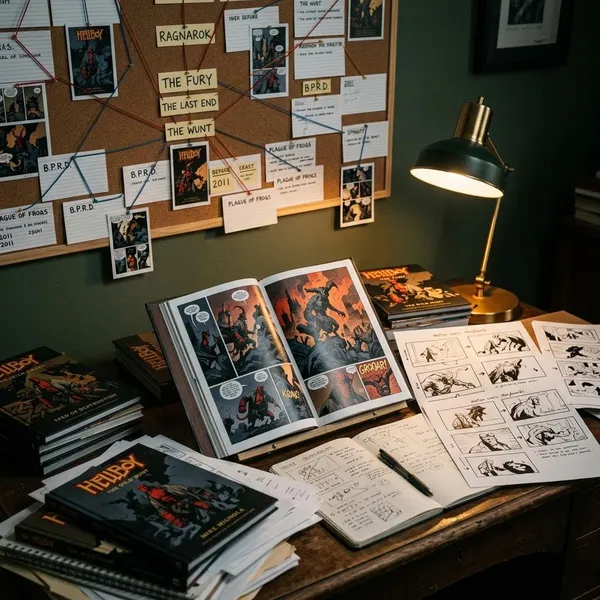
The Fury sits after The Storm, concludes the larger Wild Hunt storyline, and leads into Hellboy in Hell. That makes it a key bridge between two major phases of Hellboy's story.
The Fury follows The Storm
The Fury follows The Storm directly, so skipping The Storm can make the opening feel abrupt. The basic villain and stakes are still understandable, but the sense of escalation depends on knowing what came immediately before.
It concludes the larger Wild Hunt storyline
The Fury brings the broader Wild Hunt arc to its conclusion. That storyline deals with Hellboy's ties to British legend, inherited destiny, and the forces trying to push him toward a world-changing role.
This is why the story has more weight than a quick plot summary suggests. It is not important because it is long; it is important because it pays off a chain of decisions, warnings, and prophecies that have been pressing on Hellboy for a long time.
Its ending leads into Hellboy in Hell
The ending leads into Hellboy in Hell, which is a major shift in setting and tone. If you jump into Hellboy in Hell without knowing The Fury, you can still admire the atmosphere, but you will miss why that next stage feels so final and strange.
Conclusion
The Fury is worth treating as an important Hellboy story first and a motion comic second. The format gives the original Dark Horse comic a more cinematic presentation, but the real reason it matters is its place in the character's main continuity. If you want the strongest experience, read or at least understand The Storm before watching, then continue into Hellboy in Hell afterward.