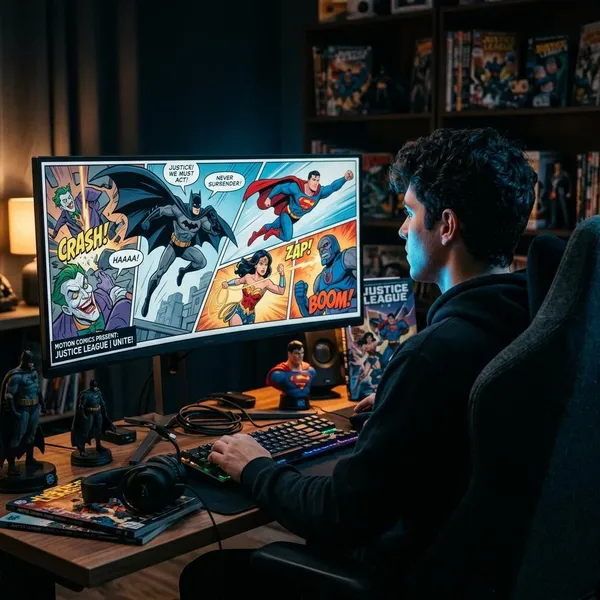
If you searched for a justice league motion comic, you are probably looking for Project Justice League, the fan-made motion-comic version of the unmade SnyderVerse sequel path. The main thing to know first is simple: it is not official DC content, but it is built around sequel ideas that were publicly discussed after Zack Snyder's Justice League.
Is Project Justice League official DC content?
Project Justice League is best treated as a fan interpretation, not as a released DC chapter. That matters if you are trying to separate SnyderVerse canon, public sequel concepts, and fan-made reconstruction.
- Official canon: no, it does not set DC continuity.
- Studio release: no, it was not made by DC or Warner Bros.
- SnyderVerse-related: yes, because it uses publicly known sequel concepts as its base.
- Best expectation: watch it as a polished fan reconstruction, not as a lost film.
It was created by fans rather than DC or Warner Bros
Project Justice League was made by fan creators who wanted to give the canceled sequel ideas a visual form. The project may look more ambitious than a quick fan edit, but that does not make it a Warner Bros production or an official DC motion comic.
This distinction is especially important when clips are shared without context. A short scene on social media can look like "new SnyderVerse content" at a glance, when it is actually part of an independently made fan project.
Zack Snyder was not the director of the project
Zack Snyder did not direct Project Justice League. The motion comic is connected to ideas associated with his abandoned Justice League plans, but the adaptation itself was created outside his official film work.
That does not make the project pointless. It simply means the right expectation is "inspired by Snyder's planned direction," not "made by Snyder." For casual viewers, that difference may not matter much; for fans tracking authorship and canon, it matters a lot.
The story uses publicly revealed sequel concepts as its foundation
The project draws from sequel concepts that became public through storyboards, interviews, fan discussions, and event coverage. Those sources gave fans a rough sense of where the story might have gone: Darkseid, the Knightmare timeline, and Superman's fall all became central talking points.
Because the original sequel material was never completed as a finished film, Project Justice League has to connect pieces that were never released as one polished script. Some moments are close to known ideas; others exist to make the motion-comic version flow as a story.
What story does Project Justice League tell?
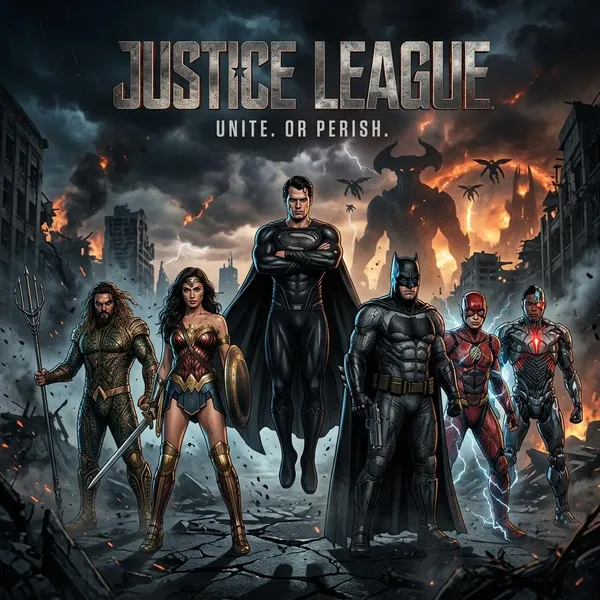
Project Justice League imagines the next stage of the SnyderVerse conflict after Zack Snyder's Justice League. Instead of starting over with a new villain, it follows the unresolved threat of Darkseid and pushes the Knightmare future into the center of the story.
That makes it more useful for one type of viewer than another. If you mainly want a light superhero adventure, this probably is not the tone you are looking for. If you were frustrated that the Knightmare scenes never paid off, this is exactly the gap the motion comic tries to fill.
The story continues the conflict with Darkseid
Darkseid moves from distant threat to the force driving the sequel-level conflict. The appeal is straightforward: the motion comic does not treat Steppenwolf's defeat as the end of the larger war, but as the point where Earth becomes impossible for Darkseid to ignore.
For someone who only remembers the theatrical Justice League, this may feel like a sudden jump. For viewers coming from Zack Snyder's Justice League, it follows the darker setup already left on the table.
The Knightmare future becomes a major part of the plot
The Knightmare future is not just a strange vision here. It becomes a major storyline, with the ruined world acting as a warning of what the heroes are trying to prevent.
- If you liked the mystery: the motion comic gives that future more shape.
- If you wanted clean answers: remember that some connective details are fan-created.
- If you dislike bleak superhero stories: this section of the plot may feel heavier than expected.
The Justice League faces the consequences of Superman's fall
Superman's fall is one of the story's biggest emotional turns because it changes him from the League's strongest safeguard into its most frightening problem. The conflict is no longer only about defeating Darkseid; it is also about surviving the collapse of the hero who was supposed to hold the line.
That is where the motion comic leans hardest into tragedy. The League is not just outmatched physically. They are dealing with broken trust, guilt, and the cost of failing before the worst future takes hold.
Fan creators fill gaps beyond the original storyboards
Not every scene in Project Justice League should be read as a direct "this would have happened exactly this way" moment. Storyboards and public comments can reveal the bones of a sequel, but they rarely provide every line of dialogue, transition, or pacing choice.
How Project Justice League was created
Project Justice League works because it turns scattered sequel material into a motion-comic format: illustrated panels, voice performances, sound, editing, and limited movement. That format is practical for a fan production because it can suggest scale and drama without needing live-action footage or full animation.
Snyder sequel storyboards inspired the narrative
The sequel storyboards helped give the project its direction. They provided a framework for the bigger conflict, including Darkseid's role, the Knightmare timeline, and major emotional turns tied to the League's failure.
Still, storyboards are planning material, not a finished movie. They can show intention and structure, but they do not always solve pacing, dialogue, or scene-to-scene continuity. Project Justice League uses them as a starting point rather than pretending they were a complete final cut.
Original artwork recreates the unmade sequel
Because there is no completed sequel footage, the visuals had to be made from scratch. Original artwork gives the abandoned ideas a clearer shape: characters can react, battles can be staged, and the Knightmare world can feel less like a loose concept and more like a setting.
This is also where viewers should keep expectations fair. It is impressive as fan-created visual storytelling, but it is not trying to match the resources of a studio film.
Voice acting and limited animation bring the panels to life
Voice acting, sound effects, music, zooms, pans, and panel movement are what make the project feel like a motion comic rather than a slideshow. The animation is limited by design, but when the timing works, it can make still artwork feel much more dramatic.
- For casual viewers: the audio helps make the story easier to follow.
- For comic readers: the panel style may feel familiar, just more cinematic.
- For film-only fans: expect an adaptation of ideas, not a substitute for a real sequel.
Conclusion
Project Justice League is worth approaching with the right label attached: a serious fan-made motion comic inspired by public SnyderVerse sequel concepts, not an official DC release and not a hidden Zack Snyder production. If you want canon, be cautious; if you want a watchable version of the Darkseid, Knightmare, and Superman-fall storyline fans kept discussing, it fills that curiosity better than scattered posts and storyboard references alone.