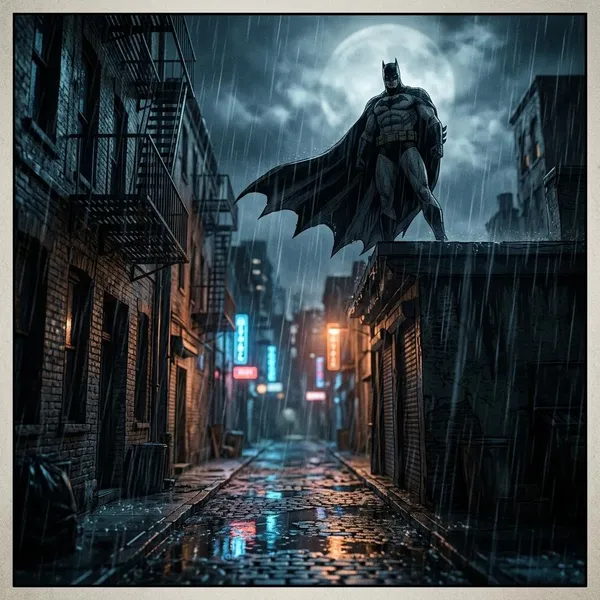
If you want a useful list of motion comics, start with the titles people still bring up for a reason: Watchmen Motion Comic, Iron Man: Extremis, Astonishing X-Men: Gifted, and Thor and Loki: Blood Brothers. DC is usually the better starting point if you like mood and iconic artwork; Marvel is easier if you want familiar characters, banter, and fast-moving superhero stories.

What is a motion comic?
A motion comic is a comic presented with limited movement, sound, and voice work. It is not a full animated series, and it usually stays much closer to the original panels, layouts, and artwork than a TV adaptation would.
The format is best when you want the feel of the comic preserved but with extra pacing and atmosphere. If you expect fluid animation, you may find some titles too static; if you enjoy comic art and narration, the same restraint can be a strength.
Comic artwork with limited animation
Most motion comics begin with existing comic art. Creators may separate a panel into layers, add camera movement, animate smoke or lighting, or shift a character slightly to create a sense of life without redrawing the scene from scratch.
That matters most for visually distinctive comics. A book like Watchmen or Thor and Loki: Blood Brothers would lose part of its identity if the art were replaced by a completely different animation style.
Voice acting, music, and sound effects
Audio often decides whether a motion comic feels engaging or flat. Good voice acting can make dialogue-heavy scenes easier to follow, while music and sound effects add tension that a still panel has to create on its own.
- Best for newcomers: titles with clear voices and strong pacing.
- Best for comic readers: faithful adaptations that keep the original art visible.
- Weakest use case: action scenes that need full movement to feel convincing.
A format between comics and full animation
A motion comic sits between reading a comic and watching animation. It is closer to an enhanced digital comic than a cartoon, so the right expectation helps a lot.
| Format | What you mainly get | When it works best |
|---|---|---|
| Comic | Original pages and your own reading pace | When layout, detail, and rereading matter |
| Motion comic | Original art with guided pacing and audio | When mood, narration, and voice performance add value |
| Animated series | Full movement and redesigned scenes | When action and visual flow matter more than page fidelity |
If you are trying one for the first time, choose a story you already care about. Familiar characters make it easier to notice whether the added voices and movement improve the experience or simply slow down the comic.
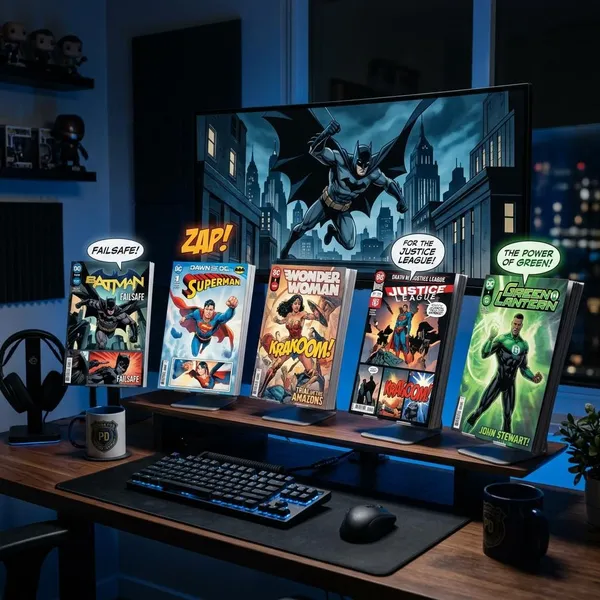
DC motion comics
DC motion comics are strongest when the source material depends on atmosphere, narration, and striking visuals. That makes DC a good place to start if you prefer moody superhero stories, Batman-related character pieces, or faithful adaptations of major graphic novels.
For a casual viewer, Batman: Mad Love or Batgirl: Year One is easier to sample. For someone who wants a landmark example of the format, Watchmen Motion Comic is the obvious first stop.
Watchmen Motion Comic
Watchmen Motion Comic is one of the defining titles in the format because it keeps the original comic's art and structure at the center. That fidelity matters: Watchmen relies heavily on layout, repetition, visual details, and controlled pacing.
It is best for viewers who want a serious, page-faithful adaptation rather than a loose reinterpretation. The dense narration and dialogue also benefit from performance, although viewers who prefer full animation may find the limited movement very deliberate.
Batman Mad Love
Batman: Mad Love works because the story is built around character psychology more than spectacle. Harley Quinn's voice, timing, and emotional swings are central to the experience, so even small visual movement can feel worthwhile when the performance lands.
Batman Black and White
Batman Black and White is a good choice if you want short, stylized Batman stories instead of one long arc. The black-and-white presentation suits motion comics well because contrast, framing, and mood do much of the storytelling.
It is also a low-commitment entry point. If you are unsure whether motion comics are for you, anthology-style Batman material is easier to test than a long, dense adaptation.
Batgirl Year One
Batgirl: Year One is more approachable than many darker DC picks. Barbara Gordon's early development gives the story a clear emotional line, and the format helps dialogue, humor, and action feel more immediate without burying the origin-story charm.
- Good for: viewers new to Batgirl or the wider Bat-family.
- Less ideal for: anyone looking for a grim Batman-centered story.
Dark Nights Death Metal Sonic Metalverse
Dark Nights: Death Metal Sonic Metalverse is a different kind of entry: louder, more event-driven, and tied to DC's multiverse-heavy Death Metal era. It is less of a classic "essential adaptation" and more useful as an example of how motion comics can support a publishing event or digital franchise moment.
Marvel motion comics
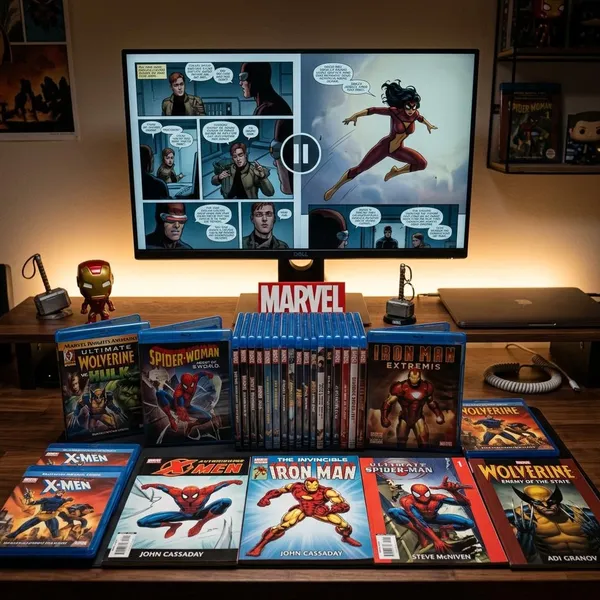
Marvel motion comics often work because the characters are already familiar and the stories lean into dialogue, rivalry, and team dynamics. If DC's strongest entries feel atmospheric, Marvel's best-known titles tend to feel more accessible and character-driven.
The easiest route is to pick by taste: Iron Man: Extremis for a major modern Tony Stark story, Astonishing X-Men: Gifted for team dynamics, Thor and Loki: Blood Brothers for darker mythic drama, or a Wolverine title for direct conflict.
Astonishing X-Men Gifted
Astonishing X-Men: Gifted is one of the safest Marvel recommendations because the story is clear, the cast is recognizable, and the team scenes benefit from voice acting. It gives a good sense of how motion comics can make dialogue and group tension feel more cinematic while still preserving the comic's visual identity.
Spider-Woman Agent of S.W.O.R.D.
Spider-Woman: Agent of S.W.O.R.D. is worth considering if you want Marvel material that is not built around the most obvious A-list heroes. Its mix of espionage, superhero action, and sci-fi tension gives the format room to use narration and atmosphere rather than relying only on fights.
Jessica Drew's perspective is important here, so the voice performance matters more than the amount of animation. If you like character-led spy stories, this is a more interesting pick than its lower mainstream recognition might suggest.
Iron Man Extremis
Iron Man: Extremis belongs near the top of any practical watch list. The story is important to modern Iron Man, and the motion comic format suits its mix of technology, body horror, action, and Tony Stark's internal conflict.
- Start here if: you want a recognizable Marvel lead and a story with lasting influence.
- Expect: more talking, tech, and mood than nonstop armor action.
Thor and Loki Blood Brothers
Thor and Loki: Blood Brothers is one of Marvel's most distinctive motion comics because it leans into tragedy, resentment, and mythic atmosphere. The painted artwork gives it a heavier visual identity than many superhero adaptations.
This is a better fit for someone who likes dramatic character conflict than for someone looking for a simple superhero adventure. The limited motion works in its favor because the story already feels staged, tense, and theatrical.
Ultimate Wolverine vs Hulk
Ultimate Wolverine vs Hulk has the clearest hook on the Marvel side: Wolverine and Hulk in a brutal clash. It is not the most subtle choice, but that directness is part of the appeal.
Choose this when you want momentum and confrontation. The format can sell impact through edits, sound, and sharp framing, though anyone expecting fully animated fight choreography should keep expectations realistic.
Wolverine vs Sabretooth
Wolverine vs Sabretooth is more personal than a simple fight title. The rivalry carries history, threat, and ugliness, so the best moments come from tension and voice work as much as physical violence.
Marvel Knights Eternals
Marvel Knights Eternals is useful if you want to see the format handle bigger lore and cosmic mythology. It is not as instantly accessible as Iron Man: Extremis or Astonishing X-Men: Gifted, but it broadens the Marvel side of the list.
For viewers who already like world-building, the guided pacing can help. For someone who only wants the most famous superhero names, it may be better as a later pick.
Conclusion
The best way to use a motion comic watch list is to choose by viewing mood, not just by publisher. Start with Watchmen Motion Comic if you want a landmark faithful adaptation, pick Iron Man: Extremis or Astonishing X-Men: Gifted for an easier Marvel entry point, and save the more niche or event-driven titles for when you already know you enjoy the format. Video game and sci-fi tie-ins such as Dead Space and Uncharted-related projects also show why motion comics are not limited to superheroes, but DC and Marvel remain the clearest starting places.